A comprehensive guide to the contraceptive pill brands

Medically reviewed by
Dr Zoe MillerLast reviewed: 24 Jun 2025
In the UK, a lot of contraceptive pill brands are available from different manufacturers. While many brands contain a unique combination of active ingredients and doses, some are very similar or exactly the same, meaning that choosing the most suitable option for you can be a complex decision.
In this guide, we break down the differences between contraceptive pill brands so that you can confidently decide which contraceptive you want to use.
What different types of contraceptive pills are there?
There are a wide variety of contraceptive pill brands in the UK, but they can be sorted into a few different categories, which makes them easier to compare. The contraceptive pill comes in 2 different forms:
- A combined pill (containing 2 hormones).
- A mini pill (containing 1 hormone).
Combined pills can then be broken down into further categories, including:
- low-oestrogen combined pills
- monophasic and phasic combined pills
Some may be more suitable for you, depending on your medical history, current conditions, and preferences.
Combined contraceptive pill brands
The combined pill contains a combination of 2 synthetic hormones, progesterone and oestrogen. It primarily works by stopping ovulation, along with thinning the uterine lining and thickening the cervical mucus. Because it contains 2 hormones, it has some benefits over the mini pill, which only contains progesterone.
Advantages and disadvantages of the combined pill:
| Advantages | Disadvantages |
|---|---|
✓ Most combined pills can be taken up to 24 hours late but remain effective (though some require you to take them within 12 hours). ✓ Can stop ovulation (an egg being released from your ovaries). ✓ Less chance of progesterone-only side effects. ✓ May improve hormone-related conditions, including:
✓ Periods can be less heavy, painful, and irregular. |
✗ Not suitable for people who are breastfeeding, or people over 35 who smoke. ✗ Higher risk of oestrogen-related side effects (such as breast tenderness, nausea, and headaches). ✗ Small risk of blood clots. ✗ Needs to be taken consistently, and missing one can make it less effective. |
Popular contraceptive pills from our patients


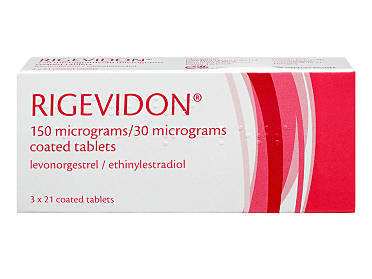
In this section, we’ll be looking at some popular UK brands of combined contraceptive pills for you to consider, along with what generation of pill they are, what this means, and the properties of each.
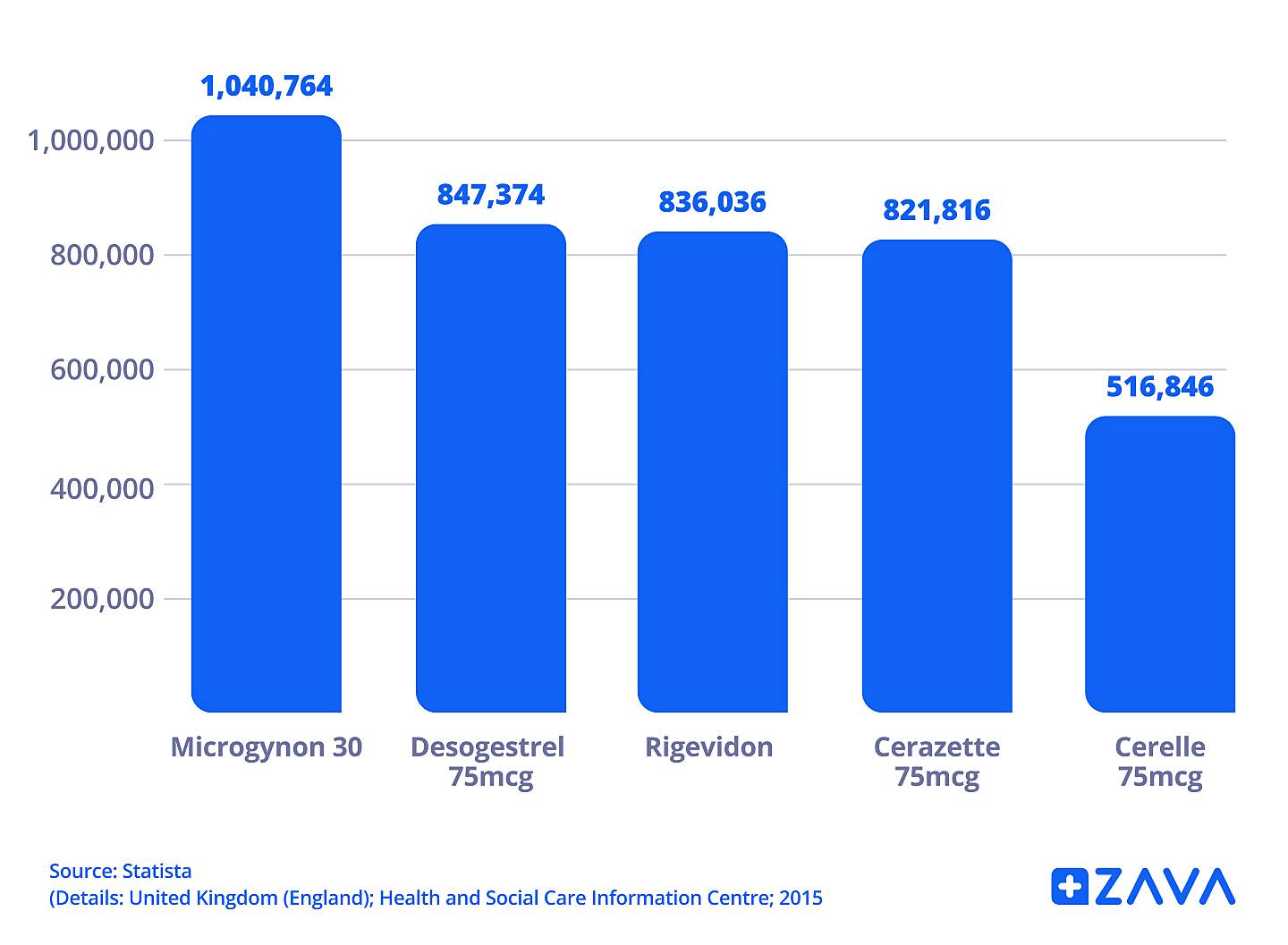
Overview of commonly used combined pills in a 2015 study.
Rigevidon
Rigevidon:
- contains 150mcg of levonorgestrel and 30mcg of ethinylestradiol
- is a second-generation progesterone pill
- is similar to Levest, Ovranette, and Microgynon 30
Levonorgestrel and ethinylestradiol pills, like the Rigevidon pill, were introduced in the 70s. Levonorgestrel is known as a second-generation progesterone because it was discovered after the progesterones used in first-generation pills and largely replaced them as a safer alternative. Unlike first-generation progesterone pills, second-generation progesterone pills like Rigevidon are still widely used.
There are also third and fourth-generation progesterone pills, and they all come with their own benefits and disadvantages. Second-generation pills, compared to first-generation, are safer and cause less breakthrough bleeding, but may have higher androgenic effects. This means they act like androgens in your body (male sex hormones) and cause side effects associated with androgens, such as acne.
Microgynon 30
Microgynon 30:
- contains 150mcg of levonorgestrel and 30mcg of ethinylestradiol
- is a second-generation progesterone pill
- is similar to Levest, Ovranette, and Rigevidon
Microgynon 30 is a very similar pill to the one discussed above, Rigevidon. They both contain the same active ingredients in the same doses. Like the Rigevidon pill, Microgynon is a second-generation progesterone pill containing levonorgestrel and is still widely used today.
Yasmin
The Yasmin pill:
- contains 3 milligrams of drospirenone and 30 micrograms of ethinylestradiol
- is a fourth-generation progesterone pill
- is similar to pills like Eloine and Lucette
The progesterone in Yasmin, drospirenone, was patented in 1976 but not used medically until 2000. Called a fourth-generation progesterone, it has less of an androgenic (male hormone) effect, making it less likely to cause acne but also less effective for treating endometriosis.
On the other hand, drospirenone comes with a slightly higher risk of blood clots, although it’s still very low. Overall, drospirenone combined pills are generally safe and suit many women better in terms of side effects.
Marvelon
Marvelon:
- contains 150 micrograms of desogestrel and 30 micrograms of ethinylestradiol
- is a third-generation progesterone pill
- is similar to Gedarel and Mercilon
Marvelon contains the third-generation progesterone desogestrel, which was discovered in 1972 and became available for use in Europe in 1981.
This progesterone has less androgenic and estrogenic activity (properties similar to the male and female sex hormones), which means the side effects and benefits of both of these hormones may be reduced. But, like drospirenone pills, desogestrel pills come with a slightly higher risk of blood clots, although they’re safe and well-tolerated overall.
Lucette
Lucette:
- contains 3 milligrams of drospirenone and 30 micrograms of ethinylestradiol
- is a fourth-generation progesterone pill
- is similar to Eloine and Yasmin
Very similar to Yasmin, Lucette contains the same hormones in the same doses, including the fourth-generation progesterone drospirenone. This means it also has less androgenic (male hormone) effect and has a lower risk of some side effects, but like Yasmin, the drospirenone comes with a slightly higher risk of blood clots. Still, Lucette is safe if approved by a doctor.
Levest
Levest:
- contains 150 micrograms of levonorgestrel and 30 micrograms of ethinylestradiol
- is a second-generation progesterone pill
- is similar to Microgynon 30 and Rigevidon
Levest is similar to Rigevidon and Microgynon 30, as it contains a second-generation progesterone and contains the same active ingredients in the same doses. Sometimes the same pill is made by different manufacturers, so the only difference is the brand name, and possibly some of the inactive ingredients.
Ovranette
Ovranette:
- contains 150 micrograms of levonorgestrel and 30 micrograms of ethinylestradiol
- is a second-generation progesterone pill
- is similar to Rigevidon, Microgynon 30, and Levest
Like Rigevidon, Ovranette is a generic combined contraceptive pill that contains the same active ingredients and doses as Microgynon 30, Rigevidon, and Levest.
Gedarel
Gedarel:
- contains either 20 or 30 micrograms of ethinylestradiol and 150 micrograms of desogestrel
- is a third-generation progesterone pill
- is similar to the pills Marvelon and Mercilon
Similar to Marvelon and Mercilon, Gedarel contains the same hormones in the same or similar doses. This includes the third-generation progesterone desogestrel, meaning it can come with a slightly higher risk of blood clots, and a lower chance of benefits and side effects.
The 20mcg version of Gedarel is known as a low-dose combined pill, which may be better suited to you if you are sensitive to oestrogen and its effects. It’s also got a slightly lower risk of blood clots than the 30mcg version.
Mercilon
Mercilon:
- contains 20 micrograms of ethinylestradiol and 150 micrograms of desogestrel
- is a third-generation progesterone pill
- is similar to Marvelon and Gedarel
Mercilon pills are known as low-dose contraceptive pills as they contain less synthetic oestrogen than other options like Marvelon.
Femodene
Femodene:
- contains 75 micrograms of gestodene and 30 micrograms of ethinylestradiol
- is a third-generation progesterone pill
- is similar to the pill Millinette
Femodene is a third-generation progesterone pill that contains a synthetic progestogen called gestodene. It was discovered in 1975 but first used in contraceptive pills in the late 1980s.
Norimin
Norimin:
- contains 35 micrograms of ethinylestradiol and 1 milligram of norethisterone
- is a second-generation combined pill containing a first-generation progesterone
- is similar to Brevinor
Norimin is a pill that contains the first-generation progesterone norethisterone, which was first discovered in 1951 and was then used in combined contraceptive pills in 1963. Although first-generation progesterones are not widely used in combined pills, they are still considered generally safe and effective.
Norimin is also known as a second-generation combined pill because it contains ethinylestradiol with norethisterone. Second-generation combined pills have been shown to have a slightly lower risk of blood clots than other generations, though this is not by much. Research shows that approximately 5 to 7 out of 10,000 people may be affected by a blood clot while taking a second-generation pill, compared to 9 to 12 with other generations.
Qlaira
Qlaira:
- is known as a phasic pill because it uses different doses of the active ingredients throughout your menstrual cycle
- contains newer synthetic hormones called estradiol valerate and dienogest
- is a fourth-generation progesterone pill
Qlaira is a combined contraceptive pill that is taken phasically, so the doses of the active ingredients change depending on where you are in your cycle, mimicking your natural cycle more closely than pills containing the same dose of hormones throughout the pill packet.
Qlaira contains 26 pills with active ingredients and 2 inactive (placebo) pills. Usually, combined pills are taken for 21 days with a 7-day pill-free break. Qlaira is taken for 28 days, with a 2-day hormone break, making it ideal for treating heavy periods. It contains a fourth-generation progesterone, dienogest, that was first used in contraceptives in the UK in 1995.
Brevinor
Brevinor:
- contains 35 micrograms of ethinylestradiol and 500 micrograms of norethisterone
- is a second-generation progesterone pill
- is similar to Norimin
Like Norimin, Brevinor contains ethinylestradiol and norethisterone, but in a slightly different dose.
Femodette
Femodette:
- contains 20 micrograms of ethinylestradiol and 75 micrograms of gestodene
- is a third-generation progesterone pill
- is similar to Femodene, but with a lower dose of oestrogen, and has the same dose as Millinette 20/75
Femodette is a combined contraception pill containing a third-generation progesterone called gestodene, which was first used in Europe in 1987. It’s a low-dose combined pill, because it only contains 20mcg of oestrogen.
Logynon
Logynon:
- is known as a triphasic pill as there are 3 different doses taken throughout the menstrual cycle
- contains ethinylestradiol and levonorgestrel in differing doses
- is a second-generation progesterone pill
- is similar to Ovranette, Rigevidon and Microgynon but with some dose variation
Logynon is a triphasic pill. It contains the same active ingredients and works in a similar way to Ovranette and Rigevidon. As Logynon pills have different active ingredients throughout the pill packet, it mimics your cycle more closely. This may reduce side effects and help with menstrual cycle regulation.
Logynon is also found under the brand name Logynon ED, which contains 28 pills, 7 of which are placebo pills and do not contain active ingredients. Some people prefer this to help remember to take their pill every day at the same time.
Millinette
Millinette:
- contains 20 or 30 micrograms of ethinylestradiol and 75 micrograms of gestodene
- is a third-generation progesterone pill
- is similar to the pill Femodene and contains the same dose as Femodette in the 20/75 version
Millinette comes in 2 doses, the one containing 20 micrograms of ethinylestradiol is a low-dose contraceptive pill, making it more suitable for people with oestrogen sensitivities.
Cilique
Cilique:
- contains 250 micrograms of norgestimate and 35 micrograms of ethinylestradiol
- is a third-generation progesterone pill
Cilique includes the third-generation progesterone called norgestimate. This was first patented in 1965 and was used in contraceptive pills in the 1980s. Norgestimate has low androgenic activity, so is less likely to cause androgen-related side effects.
According to a study by University College London of contraceptive pill prescribing trends between 2000 and 2018, the percentage of people being prescribed the combined pill dropped from 26% to 14% during the 18-year period. They also found that the percentage of people being prescribed the mini pill went up from 4% to 11% during the same period.
Mini pill brands
Unlike the combined pill, the mini pill only contains 1 hormone: progesterone. The mini pill works by thickening the cervical mucus so it acts as a barrier that prevents sperm from reaching the egg and can also stop the ovaries releasing an egg every month.
Advantages and disadvantages of the mini pill:
| Advantages | Disadvantages |
|---|---|
✓ Suitable for breastfeeding women. ✓ Suitable for people who cannot take oestrogen. ✓ Can help with painful periods. ✓ Can be taken by people over 35 who smoke. |
✗ Has to be taken at the same time every day, taking it a few hours late could make it less effective. ✗ There is no break, it must be taken continuously. ✗ May lead to side effects like acne, headaches, and breast tenderness. ✗ Does not have the same oestrogen-related benefits like improvements to acne. |
In this section, we’ll be looking at different mini pills for you to consider, along with what generation pill they are, what this means, and the properties of each.
Cerelle
The Cerelle pill:
- contains 75 micrograms of desogestrel
- is a 12-hour window mini pill
- contains a third-generation progesterone
- is similar to Cerazette, Hana, and Zelleta
The desogestrel in Cerelle is a third-generation progesterone, which was discovered in 1972. Because it has less androgenic (male hormone) effects, it causes less oily skin and can be less likely to cause acne than some other mini pills.
Cerelle also has a 12-hour window compared to some other mini pills with only 3-hour windows. This means you can be up to 12 hours late taking it and it will remain effective, though it's best to take it at the same time every day.
Cerazette
The Cerazette pill:
- contains 75 micrograms of desogestrel
- is a 12-hour window mini pill
- contains a third-generation progesterone
- is similar to Cerelle, Hana, and Zelleta
Cerazette contains the same active ingredient in the same dose as Cerelle. It works the same way, having less chance of causing acne and a 12-hour window for taking it.
Norgeston
The Norgeston pill:
- contains 30 micrograms of levonorgestrel
- is a 3-hour window mini pill
- contains a second-generation progesterone
- is the only pill containing only 30mcg of levonorgestrel
Compared to third-generation progesterones, the levonorgestrel in Norgeston has an increased androgenic (male hormone) effect. This means it can make acne more likely, but it can also have a bigger positive effect on endometriosis and heavy periods.
Norgeston has a short 3-hour window, so it must be taken within 3 hours of the day before to remain effective. This is something to bear in mind if you think you might forget or not always take it at exactly the same time each day. Taking it after 3 hours counts as a missed pill, and it becomes less effective.
Hana
The Hana pill:
- contains 75 micrograms of desogestrel
- is a 12-hour window mini pill
- Contains a third-generation progesterone
- is similar to Cerazette and Cerelle
Just like Cerelle and Cerazette, Hana also contains desogestrel at the same dose. So it’s got the same reduced chance of acne and a 12-hour window for taking it. The main difference is that Hana is available over the counter, without a prescription.
Noriday
The Noriday pill:
- contains 350 micrograms of norethisterone
- is a 3-hour window mini pill
- contains a first-generation progesterone
- is the only pill containing only norethisterone at this dose
Noriday contains a first-generation progesterone. While these are not widely used in combined pills any more, it’s still effective. It has less androgenic effect than second-generation progesterones, but more than third-generation ones. This means it may not always improve endometriosis symptoms like heavy periods or acne.
Zelleta
Zelleta:
- contains 75 micrograms of desogestrel
- is a 12-hour window pill
- is a third-generation progesterone
- is similar to the pills Hana, Cerazette, and Cerelle
Like Hana or Cerazette, the Zelleta pill contains desogestrel at the same dose. It has the same 12-hour window for taking it and the same reduced chance of acne.
Monophasic pill brands
The most common type of contraceptive pill, a monophasic pill, is a combined pill with the same dose that you take at the same time – most commonly taken as 1 a day for 21 days, followed by a 7-day break.
During the 7-day break, you will have a ‘withdrawal bleed’ that is similar to a period but is a bleed caused by the hormone-free break. After 7 days, you start the next set of pills, even if you are still bleeding. Monophasic pills can also be taken continuously, without a break.
At ZAVA, the following 21-day monophasic pills are available:
- Marvelon, containing 150mcg desogestrel and 30mcg ethinylestradiol
- Yasmin, containing 3mg drospirenone and 30mcg ethinylestradiol
- Brevinor, containing 35mcg ethinylestradiol and 500mcg norethisterone
- Rigevidon, containing 150mcg levonorgestrel and 30mcg ethinylestradiol
- Norimin, containing 35mcg ethinylestradiol and 1mg norethisterone
- Microgynon 30, containing 150mcg levonorgestrel and 30mcg ethinylestradiol
- Mercilon, containing 20mcg of ethinylestradiol and 150mcg desogestrel
- Femodette, containing 20mcg ethinylestradiol and 75mcg gestodene
- Femodene, containing 75mcg gestodene and 30mcg ethinylestradiol
- Gedarel, containing either 20 or 30mcg ethinylestradiol and 150mcg desogestrel
- Lucette, containing 3mg drospirenone and 30mcg ethinylestradiol
- Levest, containing 150mcg levonorgestrel and 30mcg ethinylestradiol
- Ovranette, containing 150mcg levonorgestrel and 30mcg ethinylestradiol
- Millinette, containing either 20 or 30micrograms of ethinylestradiol and 75mcg gestodene
- Cilique, containing 250mcg norgestimate and 35mcg ethinylestradiol
28-day monophasic pills are taken every day. They include 21 pills containing hormones and then 7 placebo pills (hormone-free). You will still experience a withdrawal bleed when taking the placebo pills. Some people may prefer this method of pill taking as it helps you to remember to take the pill every day, possibly making it less likely that you’ll miss pills. There is no other clinical benefit of using the placebo pills.
Multiphasic pill brands
Multiphasic combined contraceptive pills contain different levels of hormones which work to follow the natural hormone changes of your menstrual cycle more closely. A typical pack is divided into 2 to 4 colour-coded sections, each containing a different level of hormones. These types of pills also come in 21 or 28-day packs.
Multiphasic pill brands available at ZAVA include:
Low-dose pill brands
A low-dose combined pill is a contraceptive pill that contains a lower dose, usually 20mcg or less of oestrogen, compared to the common 30 or 35mcg.
Taking a low-dose oestrogen contraceptive can help to reduce side effects such as headaches, breast tenderness, and nausea. The reduced oestrogen can also reduce the risk of blood clots. When taken properly, low-dose pills are just as effective as pills containing more oestrogen.
At ZAVA, we can prescribe the following low-dose pills:
- Mercilon, containing 20mcg ethinylestradiol and 150mcg desogestrel
- Gedarel 20/150, containing 20mcg ethinylestradiol and 150mcg desogestrel
- Millinette 20/75, containing 20mcg ethinylestradiol and 75mcg gestodene
- Femodette, containing 20mcg ethinylestradiol and 75mcg gestodene
Which contraceptive pill brand is best for me?
Which pill is suitable for you will depend on:
- your current and past health conditions
- what side effects you’re looking to avoid
- what benefits you want from your pill
- if you’re likely to forget doses
If you’re still not sure which pill to choose, a healthcare professional can give you advice. ZAVA’s online doctor service can review your situation through our assessment and check whether the pill you request is right for you, and suggest alternatives. You can also have a phone consultation with one of our doctors to discuss your options before making a decision.
Frequently asked questions
Where can I get the contraceptive pill?
You can get the contraceptive pill:
- from a nurse or doctor at your GP surgery
- at a sexual health clinic
- online from a regulated doctor service like ZAVA
- over the counter for certain brands of mini pill, such as Hana
With ZAVA, you can request treatment online without a face-to-face appointment. Instead, you can fill out a simple online health assessment straight from your computer or mobile phone for a ZAVA online doctor to review. If your request is approved, your chosen contraceptive pill can be delivered straight to your door or for collection at your local Post Office. If it is not approved, a doctor will get in touch with alternative suitable treatments.
What is the most common birth control pill brand?
Pills can go in and out of fashion as people learn about and try different brands. Microgynon was generally the most widely used in the UK from 2015 data, and is one of the most popular picks at ZAVA.
Can I take a different brand of birth control?
If you’re already on a brand of birth control, then switching is possible. A doctor can help you switch from one brand to another, even between combined pills and mini pills. You can also tell our doctors what pill you’re on during a ZAVA assessment and they can help you switch.
Is Rigevidon a monophasic pill?
Yes, Rigevidon is a monophasic pill. This means it only uses 1 dose of ingredients throughout the whole course of treatment. In this case, Rigevidon contains 150 micrograms of levonorgestrel and 30 micrograms of ethinylestradiol, and these doses do not change.
What are the top 5 contraceptives?
Different contraceptives suit different people, so it’s hard to say what ‘top’ contraceptives will be for you. Many contraceptives are over 99% effective when used properly, although some can be less effective because people do not always use them properly. For example, with typical use of the pill, the effectiveness drops to 91%.
Here is a list of the most effective contraceptives that have little risk of failure:
- contraceptive implant, inserted under the skin, 99.95% effective and reliable
- male sterilisation, permanent but 99.9% effective if the procedure is successful
- intrauterine system or ‘IUS’, similar to the coil but contains hormones and is 99.8% effective
- female sterilisation, just like male sterilisation it’s very effective (99.5%) but permanent
- intrauterine device or ‘IUD’, often called ‘the coil’, this contraceptive is 99.4% effective when inserted correctly
➤ You can find out more about these alternatives in our ultimate guide to different contraceptive methods.

After completing her first degree, she went on to study graduate-entry medicine at Warwick University. After graduating as a doctor, she worked within the West Midlands in Urology, Respiratory Medicine, Infectious Disease, and Psychiatry before transitioning into a full-time medical communications role.
Meet our doctorsLast reviewed: 24 Jun 2025
-
FSRH Guideline (January 2019, amended October 2023) Combined Hormonal Contraception, British Medical Journal Sexual & Reproductive Health [accessed 24 June 2025]
-
How well contraception works at preventing pregnancy, NHS [accessed 24 June 2025]
-
How effective are the available contraceptive methods?, NICE/CKS [accessed 24 June 2025]
-
Triphasic versus monophasic oral contraceptives for contraception, Cochrane Database of Systematic Reviews [accessed 24 June 2025]
-
Progestogen-only pill, NHS [accessed 24 June 2025]











 Secure payment


