Malaria tablets
Request malaria tablets quickly and easily if you’re jetting off to a high-risk malaria area.
Prices from £22.00
Simply fill in a brief consultation questionnaire and one of our doctors will review your request today.
- Choice of malaria tablets available.
- Up to 98% effective protection against malaria.
- Free discreet delivery as standard in time for your trip.
Malaria tablets

In stock. Prices from £24.00

In stock. Prices from £22.00
In stock. Prices from £35.00

No results found.
Please check your spelling or try another treatment name.


Malaria tablets
-
-
Malaria is an infectious disease that’s spread by mosquitoes. It’s only found in certain parts of the world, but it can be very serious and needs urgent treatment.
It’s the most common imported infectious disease in the UK, affecting 1719 people in 2019.
Malaria is caused by the female Anopheles mosquito, which can transmit the malaria-causing parasite (called Plasmodium) by biting you.
The parasite then enters the bloodstream and moves into the liver cells, where it matures. Once mature, the parasites reproduce and infect the red blood cells, where they replicate and release further parasites into the bloodstream.
What are the symptoms of malaria?
The symptoms of malaria are caused by the parasites entering the blood. These symptoms can be quite vague and are easily confused with other things. They include:
- a high temperature (fever)
- headache
- feeling confused
- feeling very tired or fatigued
- feeling and being sick
- stomach pain
- diarrhoea
- reduced appetite
- muscle pains
- yellow whites of the eyes or skin (jaundice)
- a sore throat
- coughing and/or difficulty breathing
These symptoms usually appear 7 to 18 days after being bitten, but they can show up weeks or even months after you travelled to an area where malaria was present.
It’s important to be treated for malaria as soon as you get symptoms, or the condition can progress and become more serious.
In more severe cases, malaria can cause:
- reduced consciousness or seizures
- kidney problems
- low blood sugar
- severe breathing problems
- severe anaemia
- uncontrolled bleeding
- shock
- sepsis
- build up of acid in the blood
Malaria can be treated in hospital with medication, but it’s better to take precautions that reduce the chances of catching it.
If you’re travelling to a high malaria risk area, you should take antimalarial medication before, during, and after your travels. Covering your arms and legs (especially in the evening), using insect repellent, and sleeping under a mosquito net can also help lower your chances of being bitten and catching malaria.
-
-
Malaria is not found everywhere, and tends to be focused in tropical parts of the world, such as:
- Africa
- Asia
- Central and South America
- Dominican Republic and Haiti
- parts of the Middle East
- some Pacific islands
The UK government publishes updated guidance on malaria every year, including which countries are high-risk and where it’s recommended to take anti-malarial medication.
Generally, for countries that have a low risk of malaria, it’s often enough to take bite avoidance measures (like covering up and using insect repellent), unless you’re travelling during a high-risk season.
For countries that are moderate or high risk, it’s recommended to take preventative medication.
For the most up-to-date information about your travel destination, visit the government-recommended TravelHealthPro website. Here, you can find out whether you need antimalarial medication and which type is recommended.
-
-
There are lots of different antimalarial medications you can take when travelling. A healthcare professional can advise you on the best option for you based on your health and travel destination.
Doxycycline
Doxycycline is an antibiotic that works to stop the malaria-causing parasite from being able to create proteins, which means it’s unable to grow and replicate.
You should take 100mg (1 tablet) daily, starting 1 to 2 days before travel, continuing throughout your time in the at-risk area, and for 4 weeks after leaving. This medication is similarly effective to mefloquine at preventing malaria.
Doxycycline should not be used during pregnancy or when breastfeeding.
Atovaquone plus proguanil
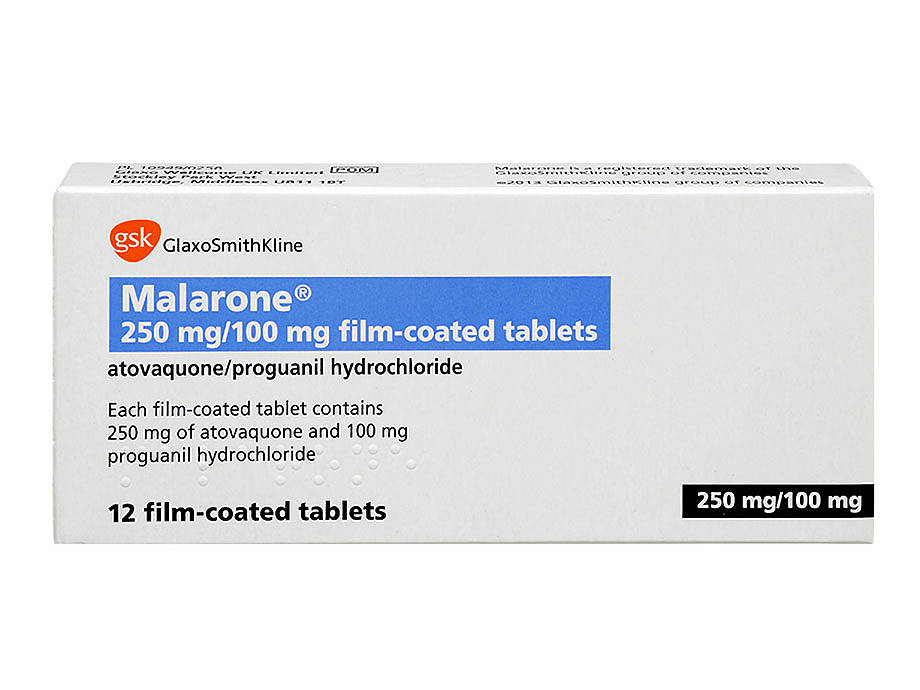
Atovaquone and proguanil are anti-malaria medications, also found under the brand name Malarone. This combination medication works by stopping the malaria-causing parasite from being able to generate energy and stopping them from multiplying. Combining the 2 medications reduces the chances of resistance.
Adults should take 1 tablet a day, starting either 1 or 2 days before travel, continue this during travel, and then for 7 days after leaving the at-risk area. It’s highly effective against malaria and well-tolerated, meaning it can cause fewer side effects than some other anti-malarials.
This medication is not suitable for people with severe kidney problems, or people who are pregnant or breastfeeding.
We can prescribe both the generic version of atovaquone and proguanil and the branded version Malarone. Both are just as effective, contain the same active ingredients, and work in the same way. Generic medications tend to be cheaper.
Mefloquine
This medication works on the blood stage of malaria infection, but scientists and doctors have not fully been able to find the specifics of how it works. It’s effective at preventing malaria, but there is some resistance to mefloquine in certain countries, including Southeast Asia.
Adults should take 250mg (1 tablet) weekly, starting 2 to 3 weeks before travel, continuing while in the area with malaria and continuing for 4 weeks after. Mefloquine may not be suitable for people with mental health problems or severe liver problems.
Chloroquine
Chloroquine is toxic (poisonous) to the malaria parasite. When you take chloroquine, it builds up inside the parasite and kills it. It’s a safe medication to use during pregnancy, but it should not be used by people with a history of epilepsy.
You should take 310mg (2 tablets) weekly, starting 1 week before travel, continuing while in the area with malaria, and for 4 weeks after leaving.
Many strains of malaria have become resistant to chloroquine, making it ineffective in lots of places. It’s important to see whether there’s resistance in the area you’re travelling to when deciding whether or not to take chloroquine. Your doctor will prescribe the right treatment for you based on your area of travel.
What’s the best preventative medication for malaria?
The best treatment will depend on whether you have any health conditions, take other medications, where you’re travelling to, and your budget.
Doxycycline, mefloquine, and atovaquone with proguanil are all common and effective treatments for preventing malaria. Doxycycline and atovaquone with proguanil are available to buy from ZAVA.
-
-
Malaria tablets work in different ways to protect you against the infection. Some work by interfering with the production of proteins that the malaria parasite needs to multiply, causing your immune system to be able to kill it off, while others block the enzymes needed for it to multiply, killing the malaria-causing parasite.
How long do you need to take malaria tablets for?
You need to start malaria tablets before you go away, continue taking them for as long as you’re on your trip, and then for some weeks after you get back, so it depends on how long you are going away for.
Doxycycline: Should be started 1 to 2 days before you go and finished 4 weeks after leaving.
Atovaquone and proguanil (Malarone): Is started 1 or 2 days before travel, and treatment ends 7 days after leaving the area.
Mefloquine: Should be started 2 to 3 weeks before travel and finished 4 weeks after leaving.
You must keep taking your malaria tablet the whole time you’re in the high-risk area and for the amount of time stated by your doctor and the patient information leaflet once you leave. You’re still at risk of malaria after leaving if you get bitten. Stopping treatment early, even if you feel better, could put you at high-risk of malaria.
How effective are malaria tablets?
Malaria tablets are 92 to 98% effective at preventing malaria when taken correctly, such as not missing doses or stopping treatment early.
Antimalarial medication does not stop you from getting malaria, but it stops the parasite from reproducing and from causing the symptoms of the disease.
Different medications are effective against different strains of the parasite, and some medications, such as mefloquine, are no longer effective in certain countries (for example, Southeast Asia).
No medication is 100% effective, so it’s important to also follow any other guidance on protecting yourself against malaria alongside taking tablets, and if possible, avoiding places where there are likely to be lots of mosquitoes, such as in jungles.
-
-
You can buy malaria tablets from an online service like ZAVA or from an in-person travel clinic.
Can I buy malaria tablets online?
Yes, you can buy antimalarial tablets online from a reputable service like ZAVA. Simply select your medication of choice, fill in the medical questionnaire, and wait for a doctor to review it. Once approved, your medication will be sent to your home first-class delivery.
Can I get malaria tablets over the counter?
No, malaria tablets are only available on prescription. However, some pharmacies may be able to prescribe malaria tablets with a consultation. You’ll need to pay for this service.
Can I get malaria tablets on the NHS?
No, travel medications like antimalarial tablets are not available on the NHS, you must purchase them from a private provider. However, if you get malaria symptoms when you return to the UK, you can access treatment on the NHS.
-
-
Side effects vary depending on which antimalarial medication you choose. Not everyone experiences side effects, and they are usually mild if they do happen.
The most common side effects for doxycycline include:
- hypersensitivity
- feeling or being sick (nausea and/or vomiting)
- skin sensitivity to light
- rash
The most common side effects for atovaquone plus proguanil include:
- headache
- feeling or being sick (nausea and/or vomiting)
- stomach pain
- diarrhoea
- allergic reaction
- anaemia
- reduced appetite
- low white blood cell levels
- low sodium levels in the blood
- low mood
- abnormal dreams
- difficulty sleeping
- dizziness
- cough
- rash
- itchiness
- fever
- raised liver markers on blood test
You should continue taking your tablets unless your side effects are severe, otherwise you put yourself at risk of getting malaria. If you are worried about the side effects of your medication while travelling, visit a local doctor in your destination.
A full list of side effects can be found in the medication packaging.
How long do these side effects last?
In most cases, side effects will usually go away shortly after you stop taking the medication or once your body has adjusted to the active ingredients. Some side effects can last for weeks or months after stopping the medication, especially if you take mefloquine.
What to do if you get side effects
Most mild malaria tablet side effects can be managed at home by:
- drinking plenty of water to help keep you hydrated
- getting some rest until you feel better
- eating plain, bland foods and avoiding spicy or greasy meals
- taking over-the-counter painkillers, like paracetamol or ibuprofen
If you are finding any side effects are difficult to manage, contact your doctor or pharmacist for advice.
If you get any signs of an allergic reaction contact your doctor straight away or, in an emergency, call 999. Signs of an allergic reaction include:
- skin rash and itching
- sudden wheezing, shortness of breath
- difficulty breathing or swallowing
- swollen eye lids, face, lips, tongue, or throat
-
-
Malaria tablets may not be right for everyone – certain conditions or medications can interact with these treatments and make it less effective, or potentially unsafe.
Doxycycline may not be suitable for people who:
- are pregnant or breastfeeding
- are younger than 12 years old
- have liver or kidney problems
- are taking retinoid tablets
- have myasthenia gravis
- have SLE (lupus)
- are allergic to doxycycline or other antibiotics from the same class (tetracyclines)
- are taking warfarin
Atovaquone plus proguanil may not be suitable for people who:
- have severe kidney problems
- are allergic to any of the ingredients
- are taking metoclopramide
You should always discuss any health conditions or medications with a healthcare professional before taking medication to prevent malaria. This will ensure the medication will be safe and effective for you. Always take your medication as instructed.

Crystal qualified in Medicine at Barts and the London School of Medicine and Dentistry in 2010. She then trained as a GP in London hospitals and practices. She has a particular interest in reproductive, sexual and women’s health.
Meet our doctorsLast reviewed: 29 Apr 2026
-
A systematic review and meta-analysis of the effectiveness and safety of atovaquone-proguanil (Malarone) for chemoprophylaxis against malaria, Database of Abstracts of Reviews of Effects [accessed 20 March 2026]
-
Clinical implications of Plasmodium resistance to atovaquone/proguanil: a systematic review and meta-analysis, The Journal of Antimicrobial Chemotherapy [accessed 20 March 2026]
-
Malaria, Travel Health Pro [accessed 20 March 2026]
-
Malaria, NHS [accessed 20 March 2026]
-
Malaria Prophylaxis, National Library of Medicine [accessed 20 March 2026]
Get malaria tablets


 Secure payment


