Cilique pill
Cilique is a combined oral contraceptive pill which contains ethinylestradiol (oestrogen) and norgestimate (progesterone).


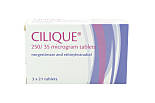

Prices from £17.00
In stock. Simply fill in a brief consultation questionnaire and one of our doctors will review your request today.
-
Please note: Cilique is long-term out of stock. Consider alternative contraceptive pills like Lizinna instead.
Cilique is a safe and 99% effective combined contraceptive pill which works to prevent pregnancy. It contains a combination of 2 synthetic versions of female hormones: oestrogen (35mcg ethinylestradiol) and progesterone (250mcg norgestimate). These ingredients work to stop you from getting pregnant by stopping ovulation, thinning the lining of your uterus to prevent an egg attaching and growing, and thickening cervical mucus to make it harder for sperm to reach the egg.
Due to the combination of hormones in Cilique, in some cases it can treat hormone-related symptoms associated with PCOS (polycystic ovary syndrome), like heavy or irregular periods, and acne.
Cilique is commonly taken for 21 days with a 7-day pill break. It comes in a strip of oral tablets, which you follow each day up until the strip ends. Once your break ends, you can move to the next one.
Prices
6 x 21 tablet(s) / 250/35 mcg - £26.00
3 x 21 tablet(s) / 250/35 mcg - £17.00



About Cilique
-
-
Cilique is a prescription-only combined oral contraceptive pill. It contains 2 hormones: oestrogen (ethinylestradiol) and progesterone (norgestimate). It is over 99% effective when taken correctly.
Cilique is manufactured by Geodon Richter (UK) Ltd.
Was Cilique discontinued?
Cilique is currently out of stock, but is not discontinued. It will be available again but in the meantime you can request alternative combined contraceptives like Cilique, such as but not limited to:
For more information see our section on Cilique alternatives.
-
-
Cilique contains ethinylestradiol (oestrogen) and norgestimate (progesterone) which work in combination to prevent pregnancy by:
- stopping the release of an egg (ovulation)
- thickening cervical mucus, which makes it difficult for sperm to travel through the womb
- thinning the lining of the uterus, so a fertilised egg would find it difficult to implant itself
Due to the changes of hormones as your body gets used to Cilique and how it works, you may also notice changes in your period. You may find that your period becomes reduced and therefore lighter, though in some cases people find that it can actually become heavier, or that it becomes more regular. The effects of Cilique can vary from person to person but combined pills have been commonly reported to provide relief from painful periods.
Cilique may also help with acne, though if you have acne we also offer acne treatments available to request.
How long does Cilique last?
If you take Cilique as prescribed and follow the instructions in your patient information leaflet, it will remain active in your body to prevent pregnancy, even during your pill break.
Cilique can take a few days to fully leave your system once you stop taking it, but your contraceptive protection will stop immediately, so you could get pregnant if you do not use another method of contraception.
If you have been taking Cilique for a long time, it will take a few months for the hormones to regulate back to how they were before you began taking it.
How long does Cilique take to work?
If you start taking Cilique on days 1 to 5 of your period you will be immediately protected from pregnancy.
If you start it any later than this you will need additional contraception like condoms for the first week (7 days) until Cilique is established and starts to work.
How effective is Cilique?
Cilique, like all combined contraceptives, is over 99% effective if you take it correctly. However, with typical use it is closer to 91% effective, such as if you miss pills, vomit, or have diarrhoea, or if you take other medications which can reduce its effectiveness.
-
-
Cilique should be swallowed whole with water at the same time each day for 21 days. Cilique comes in a strip with each pill marked on a day of the week. You should follow the direction of the arrows on the strip when taking Cilique.
After you have taken your pill once a day for 21 days, you should have a 7-day break. During this time, you may experience a withdrawal bleed (like a period), which may not be completely finished as you start your next strip, though you should still start your next strip.
During these 7 days you do not need to use extra contraception if you have correctly taken Cilique each day for 21 days.
-
-
Here is a guide on what to do if you miss a dose of Cilique in a range of scenarios:
When you missed a pill What to do next You are less than 12 hours late
Take the missed pill straight away.
Continue taking any further pills as usual, even if this means taking 2 pills in 1 day.
Your contraceptive protection should not be reduced.
You are more than 12 hours late or have missed more than 1 pill
Take the most recently missed pill straight away, leaving any earlier missed pills in the strip.
Take your next pill at the usual time, even if this means taking 2 pills in 1 day.
You’ll need to use extra precautions (like condoms) for the next 7 days.
Continue taking any further pills as usual.
Check how many pills are left in the strip after the most recently missed pill (see following section).
You missed a pill and there are 7 or more pills left in the pack
When you have finished the strip, skip the usual 7-day break and immediately start the next strip instead.
If you missed any pills from the first week of your strip and you had sex, there’s a chance you could get pregnant. Speak to a doctor, nurse, or pharmacist for advice. They may recommend using emergency contraception but only if it was less than 5 days ago that you had sex.
You missed a pill and there are fewer than 7 pills left in the pack
When you have finished the strip, skip the usual 7-day break and immediately start the next strip instead.
If you do not have a withdrawal bleed after you have finished the second strip, take a pregnancy test if you had sex.
-
-
If you find you have taken more Cilique than what is prescribed, this is unlikely to cause serious harm, however, you may experience nausea, vomiting, or vaginal bleeding. If you have taken more pills than you should have and you are concerned or experience side effects, contact your doctor or dial 111.
What if I throw up after taking Cilique?
If you throw up within 3 hours after taking your pill (or you have severe diarrhoea), it may not have fully absorbed which means that would make it a missed pill. Follow the guidance for a missed pill included within your patient information leaflet.
We recommend taking another pill and using additional contraception if you continue to be ill, until you have taken the pill for 7 days without vomiting or having diarrhoea.
-
-
Cilique is available to request for prescription only in the UK from online registered and regulated pharmacies. Always make sure that the service you are requesting from is regulated by the Care Quality Commission.
You may also be able to get Cilique for free on the NHS from your GP or a sexual health clinic.
Can I buy Cilique online?
You can request Cilique from ZAVA, all you need to do is:
- Fill out a short online medical questionnaire – this way our doctors can check your current health to assess if Cilique is suitable for you.
- Request your preferred treatment and log in or create an account to make a payment.
- One of our registered doctors will review your answers and let you know if the treatment is right for you.
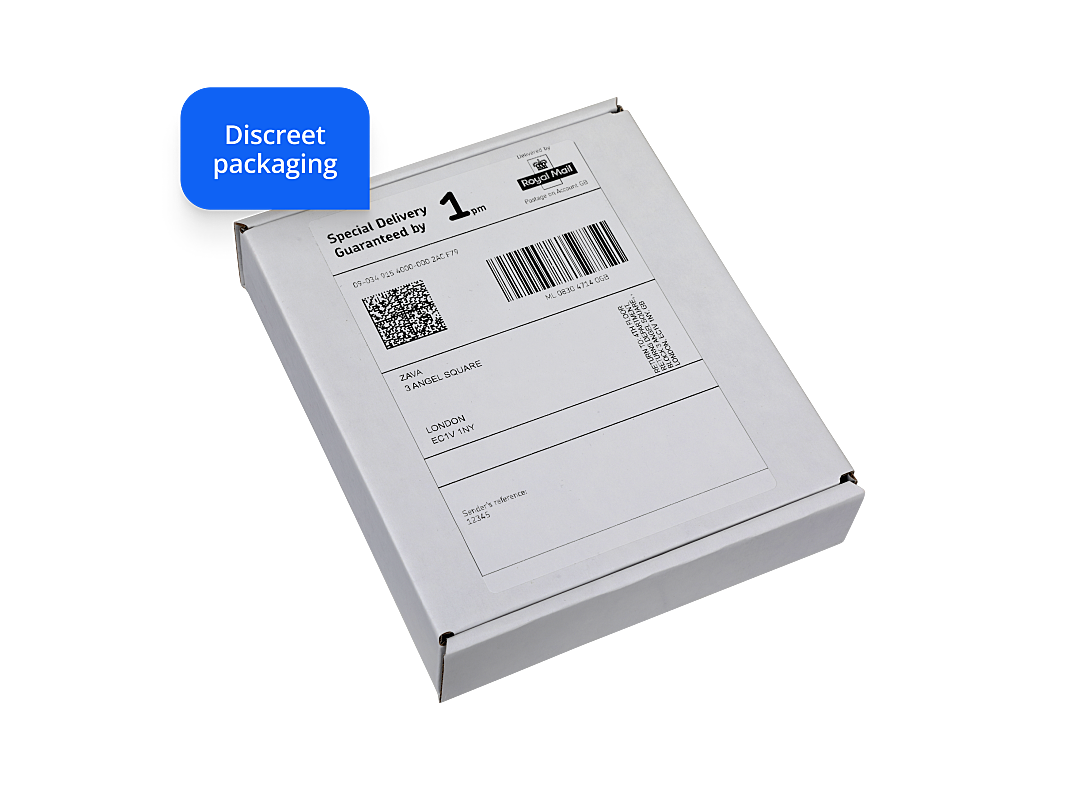
- Once approved, your medication will be delivered discreetly to your address or you can collect it from your local post office if you prefer.
Can I buy Cilique over the counter?
No, Cilique is only available via prescription, which means you cannot purchase it over the counter. You will need approval from a doctor to get Cilique.
There are some mini-pills (which only contain progesterone) available to purchase over the counter without a prescription, such as Hana.
Can I get Cilique on the NHS?
Yes, if it’s available you can request Cilique on prescription on the NHS but you would first need a consultation with your GP.
-
-
Like all medications, there is a chance of Cilique causing side effects, however, not everyone will experience this.
Stop taking Cilique right away if you experience any serious side effects, and get someone to call 999 immediately if you have:
- symptoms of a blood clot, such as pain, swelling, tenderness, warmth in arms and/or legs, difficulty breathing, chest pain, coughing up blood, fainting, or dizziness
- symptoms of a severe allergic reaction, including swelling of the face, lips, mouth, tongue, or throat, difficulty breathing, or difficulty swallowing
- a heart attack, stroke, or mini stroke
- symptoms of a serious liver problem, including severe pain in upper abdomen and yellow skin or eyes
- fitting (convulsions)
Other serious side effects that you should look out for and speak to your doctor about straight away include:
- increased blood pressure
- breast changes, such as lumps you can see or feel, dimpling of the skin, or changes in the nipple
Common side effects (may affect more than 1 in 10 people) include:
- headache
- stomach problems (may include nausea, vomiting, or diarrhoea)
- bleeding and spotting between periods
- painful or unusual periods
- migraine
- swollen hands, ankles, or feet
- mood changes
- feeling dizzy
- difficulty sleeping
- stomach ache
- constipation, bloating, or wind
- acne
- rash
- muscle spasms
- pain in legs, arms, and back
- painful breasts
- UTIs (urinary tract infections)
- thrush
- vaginal discharge
- no periods
- feeling weak
- weight gain (fluid retention)
Uncommon side effects (may affect up to 1 in 100 people) include:
- fuller breasts
- fluid from nipples
- abnormal cells in cervix
- feeling anxious, faint, tingling sensations, or numbness
- changes in skin color
- skin problems like redness and itchiness
- hair thinning
- excessive hair growth
- changes in appetite
- weight changes
- change in sex drive
- dry eyes
- changes in vision
- palpitations
- hot flushes
- muscle pain
- vaginal dryness
- ovarian cysts
Rare side effects (may affect up to 1 in 1,000 people) include:
- lumps in breasts
- loss of sex drive
- feeling strange or unusual
- faster heart beat
- pancreatitis (inflammation of the pancreas causing severe pain in stomach and back)
You can find further guidance and information on side effects in the patient information leaflet which comes with your medication.
How long do Cilique side effects last?
Cilique side effects can last around 3 months as your body gets used to the pill. However, if you experience any severe side effects that won’t go away, you should speak to your doctor and they might recommend an alternative contraceptive pill.
What to do if you get Cilique side effects
If you experience common, mild side effects like nausea, headaches, or spotting (bleeding) this is typical and they should subside.
We suggest waiting for your body to adjust to the pill, and in the meantime easing your side effects for:
- headaches, by taking painkillers like paracetamol or ibuprofen
- nausea and stomach ache, by taking the pill at night or with food
- spotting (bleeding in between periods), by taking your pill at the same time each day
-
-
Cilique is an effective way to prevent pregnancy for many women, however this does not mean it is right for everyone. Your doctor should take into account possible risk factors like your medical history, family history, weight, age, and smoking status to assess if Cilique is suitable for you.
Do not take Cilique if you have:
- problems with your heart, circulation, or blood clotting
- high blood pressure
- angioedema (swollen face, tongue, throat, or difficulty swallowing)
- diabetes
- liver or gallbladder disease
- Crohn's disease or ulcerative colitis (inflammatory bowel disease)
- systemic lupus erythematosus
- a history of migraines
- high cholesterol
- pancreatitis
- an operation coming up or you will be off your feet for a long time
- had any problems while pregnant such as itchy skin, blister rashes, or yellowing skin or eyes, hearing problems, lupus, headaches, or uncontrollable twitches/jerky movements
- sickle cell anaemia
- just given birth – you’ll usually need to wait for 21 days before taking Cilique
- haemolytic uraemic syndrome
- varicose veins
- inflammation in the veins under the skin
- a psychiatric disorder like depression or experience mood changes
- chloasma (yellow-brownish patches on our skin on your face)
There is a slight increase in risk of a blood clot when taking Cilique compared to those who do not take the pill. Though this is rare, existing factors which may increase this risk include:
- your age (if you are older than 35 years old)
- if you smoke (and are older than 35)
- if you are overweight
- if you have high blood pressure
- if you get migraines (with aura)
- if an immediate member of your family has had a heart attack or stroke at an age younger than 50
- if you have problems with your heart (such as a valve disorder or atrial fibrillation)
- if you have diabetes
You will not be prescribed the pill if you are at risk of developing a blood clot. Any increased risk of blood clots while taking the pill will go away within a few weeks after you stop taking it.
Although the pill (Cilique) can reduce risk of cancer of the ovary and womb if used for a long time, it can slightly increase cervical and breast cancer risks. This risk may be higher:
- as you get older
- if you are overweight
- if your close relative (mother, sister, or grandmother) has had breast cancer
It is important to always inform your doctor of your personal medical history and any familial medical history so that they can assess whether Cilique is safe and suitable for you.
Cilique interactions
You should always inform your doctor if you are taking other medications, including over-the-counter and herbal medications, before you take Cilique.
Medications which may interact with Cilique and may stop it from working properly include:
- epilepsy medications (like topiramate, carbamazepine, phenytoin, fosphenytoin, oxcarbazepine, felbamate, primidone, eslicarbazepine acetate, and rufinamide)
- high blood pressure medications like bosentan
- tuberculosis medications like rifampicin and rifabutin
- HIV medications
- hepatitis C medications like boceprevir and telaprevir
- nausea prevention treatments for cancer like aprepitant and fosaprepitant
- fungal infection treatments like griseofulvin, itraconazole, ketoconazole, voriconazole, and fluconazole
- daytime sleepiness treatments like modafinil
- sedatives (barbiturates)
- St. John’s Wort
- metoclopramide
- charcoal
- cholesterol medications like colesevelam, atorvastatin and rosuvastatin
- paracetamol
- arthritis treatments like etoricoxib
- vitamin C
Cilique can affect other medications for:
- diabetes – insulin
- anxiety – temazepam
- pain – morphine
- high cholesterol – clofibric acid
- pain relief – paracetamol and aspirin
- muscle relaxation – tizanidine
- fungal infections – voriconazole
- asthma, bronchitis, and emphysema – theophylline
- parkinsons – selegiline
- inflammation – prednisolone (steroid)
- epilepsy – lamotrigine
- stomach acid – omeprazole
- arthritis – ciclosporin
We recommend that you take Cilique with food and drink and do not drink grapefruit juice while taking it.
Cilique and breastfeeding
You may not be able to take Cilique if you are breastfeeding. This is because the combined pill can reduce the amount and quality of breastmilk you produce. You should speak to your doctor or family planning nurse for further advice about breastfeeding when taking Cilique.
-
-
There are a range of alternatives to Cilique if you are still unsure if it’s the best pregnancy prevention option for you.
Alternative combined oral contraceptive options include:
- Microgynon 30 – a 21-day pill containing ethinylestradiol and levonorgestrel
- Rigevidon – a combined oral contraceptive which is also used to treat heavy or irregular periods
- Triregol – another phasic pill meant to match the natural hormone changes during your menstrual cycle
- Yasmin – a combined pill that contains different types of oestrogen (ethinylestradiol) and progestogen (drospirenone)
- Zoely – a 28-day pill, with 24 pills containing active ingredients (estradiol and nomegestrol acetate) while 4 are placebo and are there to help you remember your pill every day
Cilique vs Rigevidon
There is no difference between Cilique and Rigevidon’s effectiveness, both are 99% effective at preventing pregnancy if they’re taken correctly. Both pills also:
- are to be taken daily for 21 days before a 7 day break
- contain the same form of synthetic oestrogen, ethylestradiol
Oestrogen levels
Rigevidon contains less oestrogen (30mcg ethinylestradiol). Cilique contains 35mcg of ethinylestradiol, in comparison. So, if you think a combined pill seems more suited to your needs but would prefer a pill that contains less oestrogen, Rigevidon, compared to Cilique, could be an option.
Cilique vs Microgynon
Both Cilique and Microgynon are 99% effective at preventing pregnancy if taken correctly, they also:
- should be taken daily for 21 days with a 7 day break
- contain the same form of synthetic oestrogen, ethylestradiol
Microgynon contains 5mcg less oestrogen (ethylestradiol), as Cilique contains 35mcg and Microgynon contains 30mcg. If you think a combined pill is suitable for you but experience more side effects with oestrogen, Microgynon could be a more suitable option compared to Cilique.
If you are not sensitive to oestrogen, since Cilique has slightly more oestrogen, it may have more oestrogen-related benefits, like improvements to periods.
The levonorgestrel in Microgynon has a stronger male hormone effect than the norgestimate in Cilique. This means it comes with a higher risk of side effects like acne. However, Microgynon will also have a bigger positive effect on things like the symptoms of premenstrual syndrome.
Contraceptive pill effects can vary from person to person. There are slight differences across the range of alternatives as there are varying amounts of hormones in each. This can impact hormonal changes resulting in positive or negative effects.
Mini pills
If you do not feel that the combined oral contraceptive is the best option for you, or if you are sensitive to oestrogen, or if you prefer not to take a pill that contains oestrogen, then the mini pill may be an option. The mini pill contains progesterone only. Mini pill options available at ZAVA include:
For more detailed guidance on contraceptive options available, check out our guide to contraceptive pill brands.
-
-
How should Cilique be stored?
Cilique should be kept below 25ºC in its original packaging. You should not use Cilique after its expiry date.
In which pack sizes is Cilique available?
Cilique the box contains 3 strips containing 21 (days of) pills.
Does Cilique affect your periods?
Yes, you may experience lighter or irregular periods, breakthrough bleeding, or your periods may even stop altogether. If you are concerned about any changes to your period when taking Cilique, speak to your doctor.
What does Cilique look like?
Cilique comes in the form of small blue, round oral tablets curved on both sides .

Brenda studied medicine at St Georges University of London and has most recently worked in John Radcliffe Oxford University Hospitals, covering acute and general medicine.
Meet our doctorsLast reviewed: 22 May 2025
-
Cilique package leaflet: https://www.medicines.org.uk/emc/files/pil.14860.pdf [accessed April 2025]
-
Which birth controls can help reduce acne?, National Library of Medicine [accessed April 2025]
-
Combined hormonal contraceptives for heavy menstrual bleeding, National Library of Medicine [accessed April 2025]
-
What is the combined pill?, NHS [accessed April 2025]
-
How well contraception works at preventing pregnancy, NHS [accessed April 2025]

GMC: 6149065

GMC: 7074021

GMC: 7155722


Contraceptive pills are a reliable way of reducing your risk of getting pregnant from sex. ZAVA offers most common brands of pill, so you can order your preferred brand by visiting our contraceptive pill service page.





In stock. Prices from £17.00
 Secure payment


