Treatment for acne
Request a range of acne treatments without the need for a face-to-face appointment.
Prices from £15.99
Not sure? Ask one of our doctors to recommend a treatment
Simply fill in a brief consultation questionnaire and one of our doctors will review your request today.
- Wide-range of acne treatments available, including topical creams and gels, and oral antibiotics.
- Treatments available for both non-inflammatory and inflammatory acne.
- No need for a face-to-face consultation.
Acne treatments

In stock. Prices from £23.99

In stock. Prices from £36.99

In stock. Prices from £58.99

In stock. Prices from £30.99

In stock. Prices from £23.99

In stock. Prices from £15.99

In stock. Prices from £22.99

In stock. Prices from £61.99

In stock. Prices from £74.99

In stock. Prices from £59.99

In stock. Prices from £16.49

In stock. Prices from £36.99

In stock. Prices from £29.99

In stock. Prices from £27.99

In stock. Prices from £99.00

Out of stock. Prices from £99.00

In stock. Prices from £46.99

No results found.
Please check your spelling or try another treatment name.

About acne treatment
-
-
Acne is a common skin condition that causes blemishes, spots, or pimples to appear on your skin. It’s common for acne to appear on the face, but it can also show up on other areas of the body like the neck, back, and chest.
Up to 95% of adolescents in the western world are affected by acne in one way or another. 14.6% of young people are affected by acne in the UK and it accounts for 3.5 million visits to a GP or pharmacy every year.
Acne is caused by blocked hair follicles. They can become clogged with sebum, a natural oil produced by the sebaceous glands in the skin, and dead skin cells. This can cause a type of acne called comedonal acne causing blackheads and whiteheads to form.
If your hair follicles become blocked and bacteria infect them, it can cause inflammatory or cystic acne, resulting in inflamed papules, pustules, nodules, or cysts to appear on your skin. If acne is caused by fluctuating hormone levels or imbalances, it’s called hormonal acne. The type of acne you have will affect the type of treatment you will need.
-
-

There are 6 main types of visible symptoms caused by acne:
- Blackheads – also known as open comedones, these are small black or yellowish bumps that are caused by the natural pigment in the skin, melanin, reacting with oxygen.
- Whiteheads – are also called closed comedones and appear white, but will not empty when squeezed as they do not contain pus.
- Papules – small, raised, red bumps that are 2 to 5mm in diameter and caused by an infected hair follicle.
- Pustules – small, red, pus-filled pimples, similar in size to papules.
- Nodules – large, deep pimples that are hard and sometimes painful.
- Cysts – large lumps under the skin that contain pus and are usually tender and painful to touch.
-
-

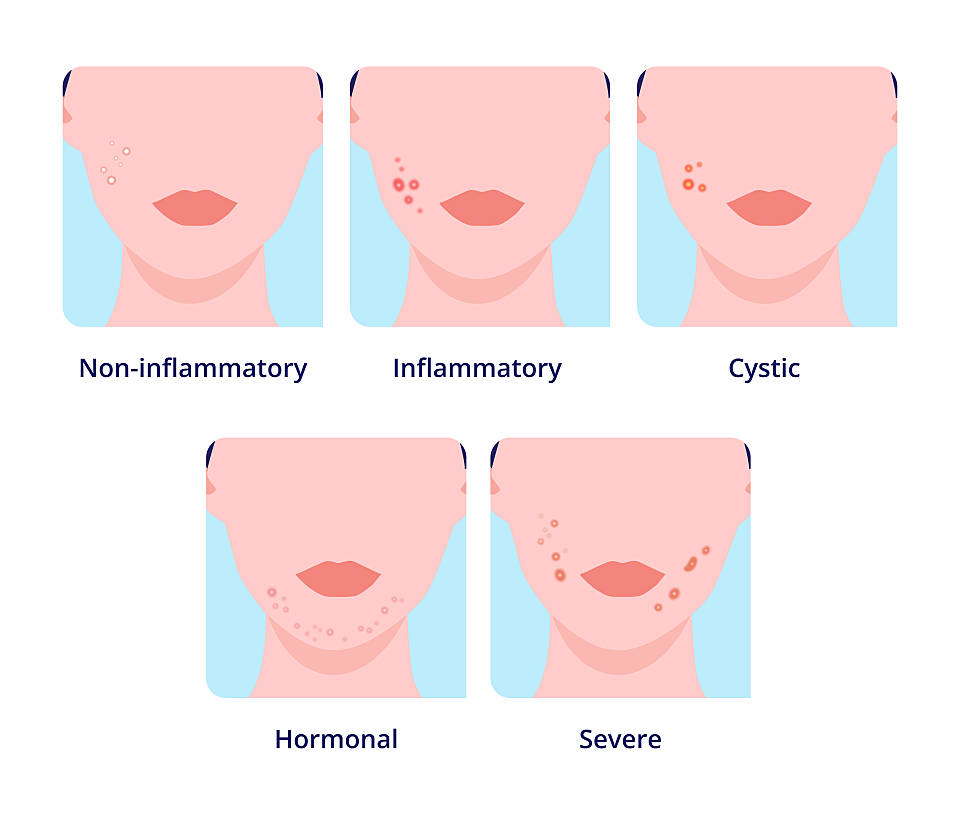
Several types of acne exist including:
- non-inflammatory acne – a type of mild acnes that doesn't cause redness, swelling, or pain and is often referred to as ‘comedonal acne’ because it forms ‘comedones’ also known as blackheads and whiteheads
- inflammatory acne – a more severe type of acne that causes red, swollen, painful lesions, particularly papules and pustules and is caused by hair follicles becoming blocked with sebum, dead skin cells, and bacteria
- cystic acne – a severe, inflammatory form of acne that’s characterised by painful cysts forming under the skin that can resemble boils and is prone to scarring
- hormonal acne – caused by hormonal imbalances, such as puberty, pregnancy, and menopause, resulting in an overproduction of sebum
- severe acne – a less common form of acne that results in the formation of many large and painful pustules, papules, nodules, or cysts
-
-
Acne is caused by your hair follicles becoming blocked. The glands attached to the follicles, called sebaceous glands, produce sebum, a naturally occurring oil that keeps your hair and skin hydrated and lubricated. However, too much sebum can clog your pores leading to acne.
Acne is not contagious. It cannot be spread from one person to another through physical contact, sharing personal items, or being near someone with acne.
Instead, it’s caused by a combination of excess sebum, clogged pores, and acne-causing bacteria. However, if you pick or pop spots, you can spread bacteria to other areas of your skin, potentially worsening breakouts.
Several factors can cause a buildup or overproduction of sebum, including:
Genetics
Acne has a strong genetic link, so if your parents had acne, there’s a high chance you will develop it. A family history of acne is also associated with an earlier occurrence of acne.
Hormone changes
Hormonal acne is a type of acne that is associated with hormonal changes or imbalances, particularly during puberty. It can also occur because of medical conditions, like polycystic ovary syndrome (PCOS), pregnancy, or menopause.
Medication side effects
Some medications can cause acne as a side effect, including:
- corticosteroids
- lithium
- testosterone
- some antibiotics
- certain antiepileptics
If you are experiencing acne and are currently taking medications, check the list of potential side effects to see if your medication could be making it worse.
Stress
Although stress doesn’t directly cause acne, it can trigger a breakout or worsen existing acne symptoms by affecting your hormone balance.
Smoking
Research shows that cigarette smoking is associated with acne in older adults. The most common type of acne caused by smoking is the non-inflammatory type.
Diet
The association between diet and acne is complex and not fully understood, but some evidence suggests that a diet high in sugar and dairy can make acne symptoms worse.
-
-
Several acne treatments are available that work by targeting the underlying cause of the breakout, such as excess oil production, clogged pores, bacterial overgrowth, and inflammation. They are available as topical or oral treatments, and may be available over-the-counter or with a prescription from a doctor.
The most effective treatment available will depend on the type of acne you have, its severity, and the underlying cause.
Topical treatments
Topical treatments are often the first-line treatment for mild-to-moderate acne. They are applied directly to the affected area to reduce inflammation, kill bacteria, unclog pores, or a combination of all 3.
Overview of acne treatments
Benzoylperoxide
- Works by killing and stopping the growht of acne causing bacteria, lowers inflammation and unclogs pores
- Effectively reduces the population of acne causing bacteria
- Takes just 4 weeks to start working but 2 to 4 months to have a full effect
- To use it you need to apply it directly to the skin once or twice a day
- Available as Acnecide 5% gel
Salicylic acid
- Works by exfoliating dead skin cells to prevent blocked pores
- Effectively reduces blackheads and whiteheads
- Takes just 6 to 8 weeks to see a noticeable effect
- To use it you need to apply it like a cleanser
- Not available from ZAVA, but available over the counter from most UK pharmacies
Topical retinoids (Adapalene, Tretinoin)
- Works by increasing cell turnover in your skin to prevent break outs
- Effectively and safely reduces acne and can be used alongside benzoyl peroxide for better results
- Takes just 8 to 12 weeks for noticeable effects
- To use it you need to apply it just once a day
- Available as Differin gel or Treclin
Azelaic acid
- Works by reducing keratin production, exfoliates the skin and unblocks comedones, preventing new ones from forming
- Effectively and significantly reduces colonisation of acne causing bacteria, reducing the number of papules and pustules
- Takes just 4 to 8 weeks to see a noticeable difference
- To use it you need to apply it twice a day
- Available as Finacea gel or Skinoren cream
Topical antibiotics
- Works by killing acne causing bacteria and reducing inflammations
- Effectively and significantly reduces pustule and papule counts after 8 weeks
- Takes between 6 to 8 weeks to work
- To use it you need to apply it once daily
- Available as Benzoyl Peroxide 5% / Clindamycin 1%
Oral treatments
Oral medications like antibiotics, isotretinoin or the combined oral contraceptive pill may be prescribed for moderate-to-severe acne, particularly if topical treatments haven’t been effective.
Oral treatments, particularly oral antibiotics may be prescribed in combination with topical acne treatment for better effectiveness.
Oral antibiotics
Oral antibiotics, such as doxycycline and lymecycline, reduce the number of acne-causing bacteria on the skin and reduce inflammation. They are most commonly prescribed to treat inflammatory acne which is characterised by red, swollen, and tender papules, pustules, nodules, and cysts. They are often prescribed alongside topical treatments like benzoyl peroxide or retinoids like Skinoren cream.
At ZAVA we offer the following oral antibiotics to treat acne:
- Llymecycline and Epiduo
- Oxytetracycline and Epiduo
- Lymecycline and Skinoren
- Doxycycline and Epiduo
- Doxycycline and Skinoren
- Oxytetracycline and Differin Gel
Oral retinoids
For severe or cystic acne that does not respond to other treatments, oral retinoids, like isotretinoin, also known as Accutane, are an effective option. Isotretinoin works by reducing oil production, shrinking sebaceous glands, and preventing clogged pores.
Isotretinoin can only be prescribed by a specialist with treatment lasting between 4 and 6 months. In around 70% of cases, acne does not return after isotretinoin treatment stops.
Combined oral contraceptive pill
For individuals with hormonal acne, particularly women who experience flare-ups related to their menstrual cycle, hormonal treatments like the combined oral contraceptive pill may be useful. They regulate hormone levels and lower the production of androgen, which increases the production of androgens.
Research shows that the most effective combinations include ethinylestradiol and once of the following synthetic progesterones:
- levonorgestrel
- norethisterone
- norgestimate
- drospirenone
- cyproterone acetate
- chlormadinone acetate
- dienogest
- desogestrel
Anti-androgen medications like Spironolactone, may be prescribed to women who have high levels of circulating androgens, male hormones. Androgens, like testosterone, can cause an over production of sebum, resulting in acne. Studies show that spironolactone can improve acne in 82% of people within 24 weeks.
-
-
The best treatment for acne will depend on several individual factors, including acne severity, skin type, and out medical history.
If there are multiple treatment options available for your specific type of acne, the best type will depend on your personal preference and any contraindications that may prevent you from choosing a particular type of treatment.
In some cases, there may only be one type of treatment available. Typically, this will be the best treatment because it is the first-line treatment and most effective method.
-
-
Acne treatment side effects will depend on the type of treatment you are given.
Topical acne side effects usually affect the area they are applied and include:
- redness
- dryness
- irritation
- itching
- burning
- peeling
These side effects should get better or go away as you continue to use the treatment. If the side effects are troubling you, you can:
- apply less cream or gel
- use it only once a day
- temporarily stop using the treatment
If the irritation continues, speak to your doctor for advice.
Side effects of antibiotic pills and capsules can include:
- feeling sick (nausea)
- stomach pain
- diarrhoea
- headaches
- photosensitivity (when taking tertracyclines)
These side effects should go away on their own once your body gets used to the medication or once you have stopped taking the antibiotics. You can help manage side effects by:
- taking the antibiotics with or just after food but avoid rich or spicy food
- applying a heat pad or a covered hot water bottle on your stomach if you have stomach pain
- drinking plenty of water or other fluids to avoid dehydration if you are experiencing diarrhoea
-
-
Acne treatments may not be suitable for everyone. There are certain conditions and medications that may make some acne treatments suitable for you. It is important to tell your doctor about your medical history and any prescribed, over-the-counter, or herbal medication you are currently taking.
Tell your doctor before taking any acne medication if you:
- are, think you might be, or are planning to get pregnant
- have liver disease
- have a history of depression or mood disorders
- have sensitive skin
- are currently taking any medication, including prescribed, over-the-counter, or herbal supplements
-
-
Acne is a common skin condition, but it may be mistaken for other medical conditions. Acne usually causes spots and blemishes on the face, chest, back and shoulders.
Here are some of the common acne symptoms:
- spots and pimples – look out for whitehead, blackheads, papules, pustules, nodules, or cysts
- acne usually occurs on the face, neck, chest, shoulders, and back
- you may have oily skin
- redness and inflammation
- frequent or persistent breakouts, especially around the time of your period
If you are not sure if you have acne, a doctor or dermatologist can assess your skin and your medical history to provide a diagnosis and an appropriate course of treatment.
At ZAVA, we have a skin photo diagnosis service where you can provide 2 images of the affected area and one of our doctors will provide a diagnosis within 24 hours and advice about any suitable treatments.
To get a diagnosis, you will need to:
- Fill out a short health questionnaire and submit 2 photos for diagnosis.
- One of our doctors will review your answers and check your provided photos.
- Within 24 hours you should receive a diagnosis and advice about what to do next.
-
-
Although acne isn’t always avoidable, especially if there is a family history or it is hormonal. There are things you can do to reduce breakouts and help keep your skin clear. They include:
Follow a good skincare routine including:
- washing your face twice a day with gentle, non-comedogenic cleansing products to remove excess oil, dirt, and bacteria
- avoiding harsh scrubbing or over-cleansing which can irritate your skin and worsen breakouts
- exfoliating gently once or twice a week with a mild exfoliant to remove dead skin cells and prevent clogged pores
- always removing makeup before bed to prevent a build up of oil and bacteria
Avoid touching your face, for example:
- avoid touching or picking your skin which can spread bacteria, wash your hands first if you need to touch your face
- refrain from popping, picking, or squeezing spots
- keep hair clean and off your face, especially if it's oily
Watch your diet, by:
- reducing your intake of high-glycaemic foods like sugary snacks and white bread
- limiting your dairy intake
- eating a healthy balanced diet that’s packed with whole foods like fruit, vegetables, healthy fats, and wholegrains
- staying hydrated to flush out toxins and keep your skin hydrated
Manage stress, by:
- trying relaxation techniques like mindfulness, meditation, and exercise to help keep stress levels low
- aiming to get 7 to 9 hours sleep per night
-

Frequently asked questions
What is hormonal acne?
Hormonal acne is a type of acne that’s caused by fluctuations in hormone levels which increases oil production, leading to clogged pores and breakouts. It is also called adult acne and typically affects teenagers, women, and people with hormone-related conditions like polycystic ovary syndrome (PCOS).
Does salicylic acid remove acne?
Salicylic acid is an effective acne treatment, particularly in mild-to-moderate cases. It works by exfoliating the skin, removing dead cells, and unclogging pores to prevent future outbreaks. Salicylic acid will not instantly remove acne and it may take 6 to 8 weeks before you notice the results.
Does vitamin C help acne?
Yes, vitamin C can be beneficial for acne-prone skin because of its anti-inflammatory properties. It can reduce redness, improve skin texture, and can help reduce the appearance of acne scars.
Can acne clear up naturally?
Although acne cannot be cured, certain lifestyle changes and natural remedies can help manage breakouts. Some people find that their acne symptoms go away on their own in early adulthood, but some people will continue to have breakouts.

Brenda studied medicine at St Georges University of London and has most recently worked in John Radcliffe Oxford University Hospitals, covering acute and general medicine.
Meet our doctorsLast reviewed: 01 May 2025
-
Acne, NHS [accessed 27 March 2025]
-
Acne and smoking, PubMed [accessed 27 March 2025]
-
Acne: Research summaries – Which birth control pills can help reduce acne? PubMed [accessed 27 March 2025]
-
Acnecide 5% w/w Gel, emc [accessed 27 March 2025]
-
Acne vulgaris: How common is it? NICE [accessed 27 March 2025]
Get acne treatment



 Secure payment


