TestCard UTI test
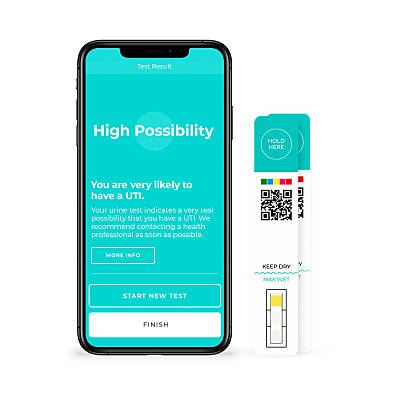
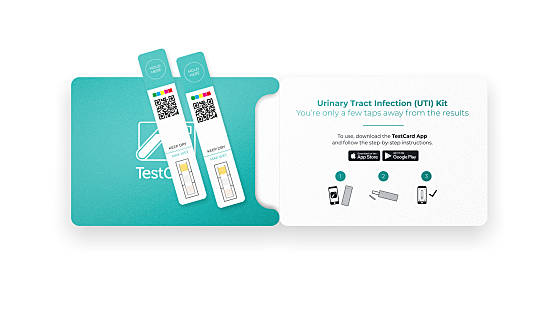
TestCard is an instant at-home dip test that will tell you quickly and accurately if you're likely to have a urinary tract infection (UTI). It's fast, reliable and all you need is your mobile phone to take the test and get results from the comfort of your home in just a few seconds.
Prices from £12.00
Before placing your order, please make sure your mobile device is compatible with TestCard.
A UTI test card is a quick, accurate and reliable way to test yourself at home for a urinary tract infection (UTI) with your mobile phone. The test is used to diagnose cystitis in men and women, enabling you to receive fast and effective treatment with ease.
Please note: ZAVA only provides cystitis treatment for women.
In this guide, we’ll discuss what the UTI test strips are for, who should get tested, and what your results mean.
In stock. Prices from £12.00
In stock. Prices from £32.99

No results found.
Please check your spelling or try another treatment name.




About UTI test strips and TestCard
-
-
The UTI TestCard is used to diagnose urinary tract infections (UTIs) like cystitis using the dedicated testing strips and mobile app. The TestCard UTI test kit detects some of the common clinical signs of a UTI, such as:
- pH – urine pH should be around 5 or 6, but if you have a UTI, it’s likely it will be 7 or above, making it more attractive for bacteria to grow and thrive
- nitrites – the presence of nitrites in the urine indicates a bacterial infection because bacteria transform nitrates, found in healthy urine, into nitrites
- leukocytes – leukocytes are white blood cells that fight infection, and a high number of these in your urine suggests your body is fighting an infection in your urinary tract
To use the UTI TestCard, you’ll need to collect a small urine sample to dip the test strip into and then scan the QR code on the test strip to get a quick diagnosis.
-
-
UTIs (urinary tract infections) affect your urinary tract, the system through which urine is passed from the kidneys and out of the body. UTIs can affect any part of the urinary tract, including the urethra (urethritis), kidneys (kidney function), and bladder (cystitis). They are caused by bacteria entering the urinary tract which causes inflammation and infection.
Cystitis is a type of urinary tract infection that affects the bladder and is particularly common in women, but it can affect anyone. Women are more susceptible because they have a shorter urethra than men, making it easier for bacteria to reach the kidneys and cause an infection.
Some of the common symptoms of a UTI include:
- pain or burning sensation when going for a pee
- needing to pee more often than usual, including at night
- sudden urge to pee or more needing to pee more urgently than normal
- cloudy pee
- blood in your pee
- lower tummy or back pain
- a fever
- very low temperature below 36°C
-
-
You should get tested for a UTI as soon as you notice any symptoms, so that you can get appropriate treatment, if necessary, and prevent further complications.
Anyone can get a UTI, but several factors can increase the risk, including:
- being sexually active
- pregnancy
- not drinking enough fluids
- a weakened immune system
- conditions that block the urinary tract, like kidney stones
- having a urinary catheter fitted
- conditions that make it difficult to fully empty the bladder, such as an enlarged prostate in men
- not keeping the genital area clean and dry
Why should I get tested for cystitis?
Cystitis is a UTI that specifically affects the bladder and is especially common in women. Although it can get better by itself, in some cases antibiotics may be needed. Getting tested for cystitis early can prevent more serious complications like a kidney infection, and ensure you get the correct treatment.
-
-
If you are experiencing any UTI symptoms, you should consider a test. It is best to get tested as soon as possible to make sure you get the right treatment and to prevent any further health complications. If your symptoms are getting worse or your symptoms haven’t improved after a few days, you should get a UTI test.
It’s only recommended that you use a UTI TestCard if you are displaying UTI symptoms.
-
-
The UTI TestCard test kit is easy to use. Begin by downloading the TestCard App. You will need this to get your results. The TestCard works with a range of iPhone and Android devices. If you’re not sure if your mobile device is compatible, you can check and download the app from the TestCard website.
Once you have downloaded the app, you’re ready to collect and test your sample. Each TestCard is supplied with its own set of UTI strips, so make sure you are using the correct strips for your TestCard. To use the UTI TestCard, you should:
- Get a clean container to collect your urine sample.
- Open a pouch and hold the test strip at the top so you can scan the QR code. This tells the app which type of test you are taking.
- Collect your pee sample from the middle of your urine stream.
- Briefly dip the test strip into the sample so that the squares get wet, but no urine goes above the ‘MAX WET’ line.
- Let the app countdown timer tell you when it's time to remove your strip from the sample and ready to scan.
- Still holding the test strip at the top, scan the test strip. The app will help you align the test strip correctly within the lines and what you need to do next.
- Your results will be displayed on the app screen and you can choose to share them with a healthcare professional if you want to.
You will be given 1 of the 3 possible test results:
- High possibility – you are very likely to have a UTI.
- Possible UTI – the test has detected that you might have a UTI.
- Negative – no UTI has been detected in your urine.
If you have a ‘possible UTI’ or ‘high possibility’ of having a UTI, you may be able to get treatment from ZAVA.
-
-
The UTI TestCard is more than 99% accurate compared to equivalent laboratory tests. A study compared the accuracy of the UTI TestCard with the method of testing used in hospitals and clinics. The results showed that the TestCard demonstrated the same level of accuracy as the hospital diagnosis method.
-
-
You will receive your results within a few seconds of scanning the TestCard UTI test strip in the TestCard app. The results will give you a quick and clear diagnosis about whether or not you are likely to have a UTI. Depending on your results, you will be told if you need treatment to clear the infection.
Our doctors are always here to help if you have any questions about your diagnosis or cystitis treatment.
Please note: to protect your privacy, ZAVA will never email or text you any test results. Instead, you will receive your results via your patient account.
-
-
Your UTI test results will usually be positive or negative, indicating that there is or isn’t an infection in your urinary tract. Once you have received your results, a doctor can help you find the most appropriate treatment.
What does a negative UTI test result mean?
If you get a negative UTI test result the UTI TestCard app will display ‘negative’ on the screen. This suggests that based on your urine sample, it is unlikely that you have a UTI.
However, if you have symptoms and receive a negative result, contact your doctor. They may recommend a urine culture to identify a specific strain of bacteria that could be causing your symptoms or further tests to rule out any other conditions.
If you do not have any symptoms and your result is negative, there is no need for a follow-up or treatment.
What does a positive UTI test result mean?
If your result is positive, the UTI TestCard app will display either of the following results:
- High possibility
- Possible UTI
In both instances, it’s likely that your urine sample tested positive for nitrites, leukocytes, or a high pH, suggesting the presence of infection. You may need treatment to help relieve your symptoms and get rid of the bacteria causing the infection.
At ZAVA, we can offer cystitis treatment if you have tested positive for a UTI and you are a woman. One of our doctors will send you a message via your patient account informing you of what to do next.
If you test positive for a UTI and our doctors are unable to prescribe you appropriate treatment, they will contact you via your patient account about what to do next or refer you to other healthcare providers, such as your GP or a pharmacist.

Brenda studied medicine at St Georges University of London and has most recently worked in John Radcliffe Oxford University Hospitals, covering acute and general medicine.
Meet our doctorsLast reviewed: 30 Apr 2025
-
Cystitis, NHS [accessed 02 April 2025]
-
Frequently Asked Questions, TestCard [accessed 02 April 2025]
-
How TestCard Technology Gives Clinical Grade Results, TestCard [accessed 02 April 2025]
-
Urinary tract infections (UTIs), NHS [accessed 02 April 2025]
-
Urinary tract infection (lower) - men, NICE [accessed 02 April 2025]




 Secure payment


