Quviviq (daridorexant)
Quviviq tablets are used to treat insomnia. They can help people fall asleep sooner and sleep for longer.



Prices from £79.99
In stock. Simply fill in a brief consultation questionnaire and one of our doctors will review your request today.
-
Quviviq is an insomnia treatment for short-term and chronic insomnia. It contains the active ingredient daridorexant, which helps to regulate your body clock (sleep-wake cycle) and reduce nighttime alertness. Unlike sedative insomnia treatments, it does not make you fall asleep because you’re drowsy or sleepy the next day.
Quviviq has been shown to help 53% of people get better sleep and function better during the day. The recommended dose is one 50mg tablet each night, around half an hour before you want to go to sleep.


About Quviviq
-
-
Quviviq is an insomnia medication that comes in the form of a tablet that you take once each evening. It can be prescribed if you have ongoing insomnia symptoms, such as:
- difficulty in falling asleep
- difficulty staying asleep
- non-restorative sleep that causes impaired daytime functioning or affects your wellbeing
Quviviq contains daridorexant and belongs to a medication group called ‘orexin receptor antagonists’. This means it blocks orexin, a substance that helps keep you awake. Quviviq is manufactured by Idorsia Pharmaceuticals UK Ltd and is a branded medication.
-
-
Quviviq can help regulate your sleep-wake cycle, which:
- makes it easier to fall asleep
- helps you stay asleep for longer
- improves your daytime functioning
It contains the medication daridorexant, which is an orexin receptor antagonist. This means it works to block the substance orexin from attaching to its receptors. Orexin is a substance that is produced in your brain, and it helps to keep you awake.
Quviviq is slightly different from some other types of insomnia treatments called sedatives, which cause drowsiness to help you sleep. This means it’s much less likely to cause drowsiness during the day, as long as you take it at bedtime.
How quickly does Quviviq take to work?
Quviviq usually takes around 30 minutes to start working, which is why you should take it around 30 minutes before you want to go to sleep for the night. For some people, it can take a few weeks to a few months to notice the full effect of the medication, and your doctor will monitor your progress. If it’s working well for you after taking it for 3 months, you can continue taking it for up to a year in total.
How effective is Quviviq?
Quviviq helped 53% of patients in clinical trials to see a ‘meaningful improvement’ in their daytime functioning due to better and more consistent sleep.
In other clinical trials, by month 3 of treatment with Quviviq, patients saw a statistically significant improvement in:
- how long they stayed asleep for
- how long it took to fall asleep
- daytime sleepiness
After stopping Quviviq, no signs of rebound insomnia (a temporary worsening of insomnia symptoms) were reported.
-
-
Swallow your Quviviq tablet whole, around half an hour before you want to go to sleep at night. The recommended dosage is one 50mg tablet, but you may be prescribed 25mg if you have liver problems or take certain medications.
Take your tablet with or without food, but it may take longer to work if you take it with a large meal.
How long can you take Quviviq for?
Quviviq can be taken for up to 3 months at first. If treatment is going well and your doctor thinks it’s best for you to keep taking it, you can continue treatment for up to another 9 months. If you want to stop taking Quviviq, you can do so straight away without having to reduce your dose, but speak to your doctor if you still need help managing insomnia.
You cannot take Quviviq for more than 1 year.
What if I miss a dose of Quviviq?
If you miss a dose of Quviviq, do not take it later during the night, as this may cause you to feel drowsy in the morning. Continue taking it as usual the following evening before bed.
Do not take a double dose to make up for a missed dose, as this can increase your chances of side effects.
What if I take too much Quviviq?
Speak to a doctor straight away if you take too much Quviviq. You can also contact 111 out of hours. You may get side effects like excessive sleepiness and headaches.
-
-
You can get a prescription for Quviviq online, from regulated online doctor services like ZAVA. It’s not available over the counter, but you may be able to get it on the NHS after you have tried cognitive behavioral therapy for insomnia (CBT-I).
Can I buy Quviviq online?
Yes, ZAVA can prescribe Quviviq to you if a doctor agrees it's a safe and suitable treatment. Here’s how to get Quviviq at ZAVA:
- Complete a short online questionnaire. This will ask for relevant health information to make sure Quviviq is suitable for you.
- Make payment through your secure online account and choose a delivery option.
- One of our doctors will review your answers and prescribe Quviviq if suitable. If it’s not, they may be able to recommend an alternative.
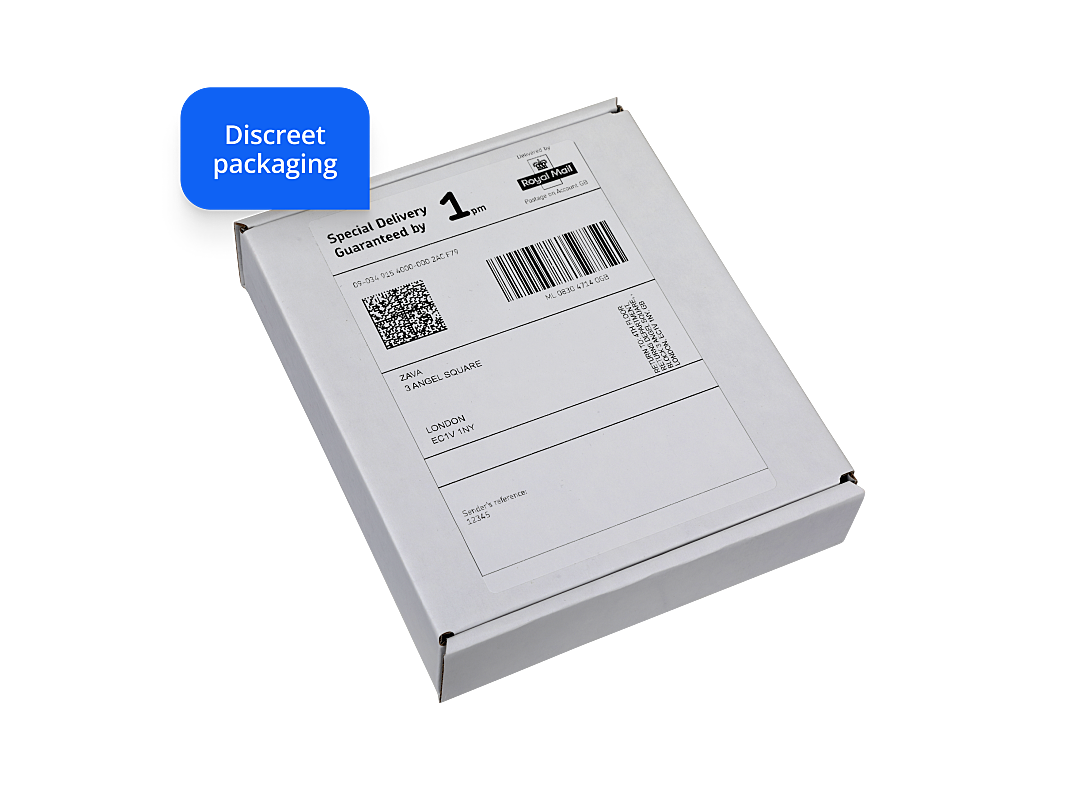
- If approved, Quviviq will be sent to your home address in discreet packaging, and our doctors will follow up with advice and support in your online account.
You can also message a doctor at any time if you have a question about your treatment.
Can I buy Quviviq over the counter?
No, Quviviq is a prescription treatment and cannot be bought over the counter.
You may be able to get other insomnia treatments over the counter, but these are most likely herbal products that have not been proven to work as well as prescription treatments. It’s important to speak to a doctor if you are struggling to sleep and this is affecting your quality of life.
Can I get Quviviq on the NHS?
Yes, Quviviq is available on the NHS, but as a second-line treatment.
This means it’s prescribed only after you have tried first-line treatment, which is cognitive behavioral therapy for insomnia (CBT-I). Quviviq can be prescribed if CBT-I has not been successful, or if it’s not available in your area or is unsuitable. You’ll need a referral for CBT-I, so it’s best to check with your GP about waiting times in your area.
-
-
Quviviq can cause some side effects, though not everybody will get them.
Common side effects of Quviviq (may affect up to 1 in 10 people) include:
- excessive sleepiness
- tiredness
- dizziness
- headache
- feeling sick (nausea)
These side effects may be more likely in the first few days of treatment, so it’s recommended to avoid driving or operating heavy machinery unless you feel fully alert. As Quviviq is reduced by half in your system after 8 hours, we recommend waiting around 9 hours after taking Quviviq before driving or using machines.
Uncommon side effects of Quviviq (may affect up to 1 in 100 people) include:
- seeing or hearing things that are not real (hallucinations)
- a temporary inability to move or talk while you're going to sleep or waking up (sleep paralysis)
- abnormal dreams
- sleepwalking
- nightmares
- allergic reactions, such as a rash or hives
Speak to your doctor as soon as possible if any of these happen to you.
As with any medication, there is a very small chance of a serious allergic reaction. Call 999 or go to the nearest A&E if you get symptoms such as:
- difficulty breathing and wheezing
- swelling in your face and throat
- fainting
- dizziness
- a new rash
For a full list of side effects, please also read the patient information leaflet before taking Quviviq.
How long do Quviviq side effects last?
Quviviq side effects may last a few days to a few weeks. Taking it every evening without missing doses is the best way to get your body used to the medication. Most side effects reported in clinical trials were mild to moderate.
In some cases, Quviviq side effects may last longer or may be severe. In these cases, your doctor will recommend an alternative treatment. There are no known permanent side effects from taking Quviviq.
What to do if you get Quviviq side effects
If you get Quviviq side effects, let your doctor know. You can also manage common side effects at home, such as:
- excessive sleepiness and tiredness – getting enough rest until you get used to the medication, and only taking Quviviq before bed, not close to morning
- dizziness – staying hydrated, eating enough calories, and resting until you feel better
- headache – taking over-the-counter painkillers and drinking enough water
- nausea – eating small, frequent meals, and taking Quviviq with food
Is Quviviq safe?
Yes, Quviviq is safe for people who are prescribed it after a doctor's review. There’s a chance of side effects, like any medication, and your doctor will monitor you closely to make sure it remains safe for you to take. It’s important to let your doctor know about any side effects you get or if you get prescribed a new medication or diagnosed with a new condition.
-
-
Quviviq is for people aged 18 to 75 who have short-term or chronic insomnia and do not have any conditions or take any medications that interact with Quviviq. Quviviq may not be right for everyone, and in this case, a doctor may be able to recommend a different insomnia treatment.
Who should not take Quviviq
Quviviq should not be taken if you:
- are under 18 or over 75
- have severe liver problems
- are allergic to any of the ingredients in the tablet
- are pregnant or breastfeeding
- have narcolepsy (a condition that causes you to fall asleep unexpectedly)
Tell your doctor before taking Quviviq if you have:
- depression or have ever had suicidal thoughts – seek medical advice or support straight away if you take Quviviq and these symptoms get worse
- a psychiatric disorder
- mild or moderate liver problems – a lower dose may be prescribed
- regularly taken recreational drugs or have been addicted to drugs or alcohol
- a condition that affects your breathing, such as severe chronic obstructive pulmonary disease (COPD)
- a history of falls and over 65 years old – some side effects may increase your risk of falls
You may still be able to take Quviviq, but your doctor may need to monitor you more closely.
Medications that interact with Quviviq
Some medications may interact with Quviviq and make it unsafe. You should not take Quviviq together with:
- tablets to treat fungal infections ending with -azole, such as ketoconazole and posaconazole
- certain medications used to treat bacterial infections ending with -mycin, such as clarithromycin and josamycin
- HIV medications ending with -avir, including ritonavir and boceprevir
- some medications to treat cancer that end with -ib, such as ceritinib, and idelasilib
Some medications may still be taken with Quviviq, but your doctor may need to monitor you closely. These include:
- medications for that work in your brain, such as those for anxiety and depression (diazepam and alprazolam)
- certain treatments for blood coagulation disorder, such as dabigatran
- certain treatment for cardiac impairment, such as digoxin
Tell your doctor what medications you are taking, and they will let you know if Quviviq is suitable.
Quviviq with food and drink
Quviviq is safe with most food and drink, however:
- it’s recommended to avoid alcohol while taking Quviviq as it may increase the chance of dizziness and falls
- you should avoid grapefruit or anything containing grapefruit in the evening, as this can increase the levels of Quviviq in your body
-
-
The Quviviq alternative offered at ZAVA are melatonin tablets. Melatonin is a man-made version of a natural hormone our body already produces. Taking melatonin in the evening works by signalling to your brain that it’s dark and time to sleep, helping to regulate your sleep-wake cycle.
You may be able to take melatonin if you cannot take Quviviq. It can be taken by people aged 18 to 55, for up to 13 weeks, so it’s more of a short-term treatment than Quviviq.
Other treatments for insomnia
There are also other insomnia treatments available, which usually work by causing a sedative effect, however ZAVA do not prescribe these. The NHS rarely prescribes this type of medication anymore because they can have serious side effects and may cause dependency. They are only prescribed short-term for a few days to a few weeks, and only if:
- your insomnia is severe
- other treatments have not worked
Quviviq vs trazodone
Trazodone is an antidepressant that can also help with sleep. It works by increasing hormone levels that can improve your mood, such as serotonin. A known side effect is feeling sleepy or tired. Quviviq and trazodone are both oral tablets. They cannot be taken together.
Trazodone cannot be prescribed for insomnia, only as an antidepressant, and the side effect of sleepiness may wear off. Quviviq can be used for up to 1 year and is designed specifically for insomnia.
In 1 study lasting 2 weeks, people using trazodone slept for an extra 42.5 minutes per night. People taking Quviviq after 3 months reported an average increase in sleep time of 59 minutes.
Quviviq vs zopiclone
Zopiclone is a generic medication and active ingredient also found in the branded medication Zimovane. Both zopiclone and Quviviq are insomnia treatments and tablets that you swallow. You take zopiclone around an hour before bed.
Zopiclone works by affecting gamma-aminobutyric acid (GABA), a chemical in your brain that has a calming effect. It can only be used for short-term, severe insomnia for 2 to 4 weeks, while Quviviq can be taken for 3 months to a year.
Your body can get used to the effects of zopiclone quickly, so it’s not effective for very long and you can become dependent on it. Quviviq is not known to cause dependency and remains effective for up to 1 year in clinical trials.
Quviviq vs Belsomra
Belsomra is a branded insomnia tablet containing suvorexant. This is not available in the UK, and is a US-approved insomnia treatment. Like Quviviq, Belsomra acts on the orexin receptor to reduce the substance and reduce nighttime wakefulness.
Both Quviviq and Belsomra have been proven to improve sleep quality, quantity, and daytime sleepiness. This is because they both work on the same receptors and so work in a similar way. Quviviq is the UK alternative to Belsomra.
Quviviq vs Dayvigo
Dayvigo is another branded insomnia tablet, but it contains the active ingredient lemborexant. It is not available or approved in the UK while Quviviq is.
Dayvigo is also an orexin receptor antagonist, so works in the same way as Quviviq. Studies show, like Quviviq, it can improve sleepiness during the day, how long it takes to fall asleep, and how long you can sleep for. Quviviq is a UK-approved alternative to Dayvigo.
-
Frequently asked questions
Does Quviviq cause weight gain?
No. Weight gain is not a listed side effect of Quviviq. However, insomnia and difficulty sleeping can cause weight changes, including weight gain. This could be caused by things like difficulty making fresh meals, being too tired to exercise and be active, or overeating due to excessive tiredness. If you need help with managing your weight, speak to your doctor.
Is Quviviq addictive?
No, Quviviq is not addictive. This makes it a safer insomnia treatment to take than many other alternatives, which can cause addiction and withdrawal symptoms.
Will Quviviq work the first night?
For some people, Quviviq might work the first night, but it’s more likely to work best as you keep taking it. Studies show that most people see results by month 1, and the best results by month 3 of treatment.
Is Quviviq better than melatonin?
Quviviq is not better or worse than melatonin, but Quviviq is recommended if you have more long-term insomnia. Melatonin can be effective for short-term insomnia, and is only used for up to 13 weeks, while Quviviq can be used for up to 1 year. Which medication is best for you depends on your symptoms and doctor’s recommendations.
Why is Quviviq not working?
It can take some time for Quviviq to start working properly, so it’s best to keep taking it every night for 3 months to reach its full effect. If it’s not working for you after this time, your doctor may recommend a different treatment. It’s also important to follow any lifestyle changes your doctor has recommended for insomnia, alongside Quviviq treatment.
Can I take Quiviviq for jet lag or shift work?

Crystal qualified in Medicine at Barts and the London School of Medicine and Dentistry in 2010. She then trained as a GP in London hospitals and practices. She has a particular interest in reproductive, sexual and women’s health.
Meet our doctorsLast reviewed: 26 Feb 2026
-
About trazodone, NHS [accessed 18 February 2026]
-
About zopiclone, NHS [accessed 18 February 2026]
-
Insomnia, NHS [accessed 18 February 2026]
-
Lemborexant (Dayvigo), National Library of Medicine [accessed 18 February 2026]
-
Should Trazodone Be First-Line Therapy for Insomnia? A Clinical Suitability Appraisal, Journal of Clinical Medicine [accessed 18 February 2026]

GMC: 6149065

GMC: 7074021

GMC: 7155722






 Secure payment


