Menopause test kit
Check whether you are approaching menopause with our accurate and easy to use home menopause test kit.




-
Officially, menopause is the point where you have not had a period for a year, but menopause symptoms can start well before this.
A menopause test kit uses a small sample of your blood to measure levels of follicle-stimulating hormone (FSH). FSH levels are often raised around menopause, and a positive result suggests you have reached menopause, especially if you also have menopause symptoms.


About home menopause testing
-
-
A menopause test is a blood test that measures your FSH levels. It can be done at home with a blood sample taken from a simple finger prick.
A menopause test measures FSH levels because it’s usually a sign that the body is working harder to produce oestrogen during menopause, which causes your oestrogen levels to decline and your periods to stop.
What is FSH, and what does it have to do with menopause?
FSH is a hormone that’s produced by a small gland at the bottom of your brain. It helps to regulate your menstrual cycle and stimulates the eggs in your ovaries to grow and mature.
As your eggs mature, the follicles surrounding them produce the hormone oestrogen, which tells your brain to release less FSH. When you approach menopause, you have fewer eggs, which means fewer maturing follicles to produce oestrogen. Your body notices your oestrogen levels are low and tries to fix this by releasing more FSH.
After reaching menopause, the ovaries do not release any more eggs, so FSH levels often remain high. However, FSH levels also rise and fall throughout your menstrual cycle, and there are other reasons that FSH levels can be high or low.
“A menopause test can provide some information as to whether you’re menopausal, but menopause cannot be confirmed using a menopause test alone. A doctor will review your symptoms, medications, general health, any test results, and other factors before diagnosing menopause.” – Dr Zoe Miller, Medical Editor.
-
-
Anyone who suspects they are experiencing menopause symptoms or has not had a period for at least 12 months might consider a menopause test. Although a GP can often diagnose menopause based on symptoms alone, a menopause blood test can provide more information.
You may want to take a menopause test if you are younger than 45 when symptoms start because they could be caused by other health conditions, although menopause is still possible, but less likely.
You may also choose to take a menopause test if you want to know more about whether you are likely to be experiencing menopause from the comfort of home without visiting your GP.
You should not take a menopause test if you are taking:
- a combined oral contraceptive pill (the type that contains oestrogen and progesterone)
- hormone replacement therapy (HRT)
These artificial hormones can affect FSH levels, and the menopause test may not be accurate.
-
-
Your doctor may suggest taking a menopause test if you are younger than 45 and have any of the following symptoms:
- menstrual cycle changes
- hot flushes
- night sweats
- mood changes
- poor concentration
- memory changes
- difficulty sleeping
- vaginal dryness
- reduced sex drive
- irritation or pain in and around the vagina
- pain when urinating (peeing)
- needing to urinate more often
- recurrent urinary tract infections (UTIs)
- fatigue
- joint or muscle pain
If you are older than 45, these symptoms are more likely to be signs of menopause, and it’s best to discuss this with a doctor, but you may choose to take a home menopause test for peace of mind.
-
-
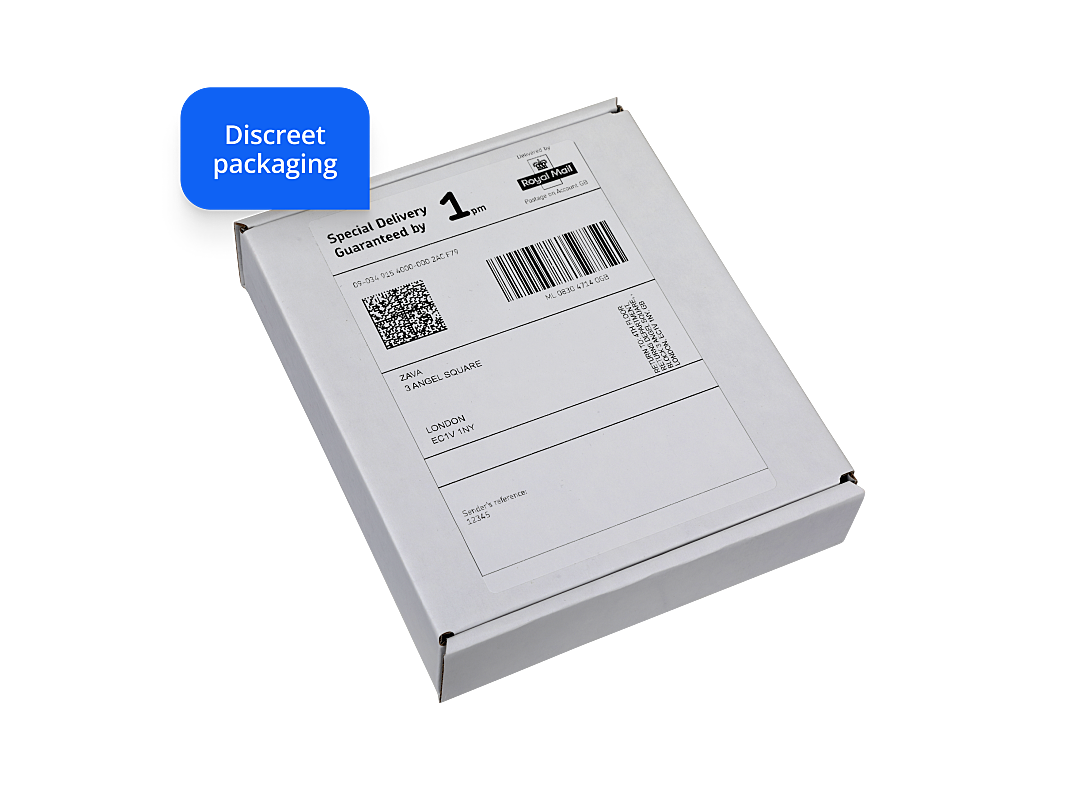
Our menopause test is a simple finger-prick test. We provide all the materials you need to do the test at home. You can take the menopause test at any time of day.
Remember to wash your hands before and after taking the test with warm, soapy water. Keep your hands warm, as this will help you collect a blood sample.
You can either follow this step-by-step guide or the information leaflet found in your test kit:
- Wipe your finger with an alcohol swab and wait for the skin to air dry.
- Twist the purple stick from the lancet to remove it.
- Put the lancet on your finger with the needle facing down, and press down on the purple button at the end until you hear a click.
- You’ll feel a sharp prick and should see a small drop of blood forming on your fingertip. If there’s no blood, try again with another lancet on a different finger.
- Wipe away the first drop of blood with a tissue.
- Open the collection tube and point your finger downwards towards the bottom of the tube.
- Squeeze your fingertip to encourage blood flow and allow the blood to drip into the tube.
- Keep squeezing your finger until you fill the collection tube to the upper line. You can use another lancet on another finger if you cannot get any more blood.
- Apply the plaster to your finger once the tube is filled.
- Screw the lid back on the collection tube securely.
- Put your details on the label and stick it to the collection tube.
- Put the collection tube in the protective packaging provided. Place the packaging into the prepaid envelope. This is now ready to post to our lab.
- You can post your sample from any Royal Mail post box.
Ideally, you should take your test at a time when you can take it straight to a post box or Royal Mail post office, and when it will get collected by Royal Mail on the same day. You can check when your local post box gets collected on the Royal Mail website.
-
-
Our menopause test kit is accurate in detecting the levels of FSH in your body. Our accredited UK-based lab partner processes all our test kits, and one of our registered doctors will check your results, explain what they mean, and what steps you should take next.
Menopause is not confirmed by a single test or symptom, and no test is ever 100% accurate.
You should always speak to a doctor after doing a menopause test, as they will be able to check whether you’re going through menopause or not by considering your symptoms as well.
-
-
You should get your results within 2 to 3 working days of your sample reaching the lab.
Your results will go directly to your confidential ZAVA account. We always prioritise your privacy and will never send your results via email or text message.
Try to avoid posting your sample before a weekend or bank holiday as this can delay your results, and may even impact how accurate they are if your sample has been in the post for several days before getting tested.
➤ You can find out more about when your menopause test kit will be delivered to you, depending on when you order, on our delivery information page.
-
-
What does a negative menopause test result mean?
If your menopause test results are negative, it’s unlikely that you have reached menopause. But if you’re getting symptoms of menopause, you may be going through perimenopause.
Perimenopause happens in the months or years leading up to menopause. During this time, your oestrogen levels reduce over time but may change from day to day, which means your FSH levels will also rise and fall. You may also get irregular periods when you are perimenopausal.
If you have suspected perimenopause symptoms and they are disrupting your daily life, it’s possible to take medication called hormone replacement therapy (HRT) that can help manage these symptoms.
➤ You do not have to wait to reach menopause and for your periods to stop for you to take HRT. Talk to your GP or check out our guide to HRT for more information.
What does a positive menopause test result mean?
If your test results show a high level of FSH and you are experiencing menopause symptoms, you’re likely to be going through perimenopause, or you have already gone through menopause and are postmenopausal.
Our team of doctors will advise you on what to do next depending on the symptoms you are experiencing. They’ll be able to refer you to other healthcare providers if that’s necessary.
Do not stop taking any hormonal contraception without first discussing it with a doctor, even after a positive test result.
-
-
Can a menopause test detect pregnancy?
No, a menopause test will not detect pregnancy. Menopause tests measure follicle-stimulating hormone (FSH) levels. Pregnancy tests measure a different hormone called human chorionic gonadotropin (hCG).

After completing her first degree, she went on to study graduate-entry medicine at Warwick University. After graduating as a doctor, she worked within the West Midlands in Urology, Respiratory Medicine, Infectious Disease, and Psychiatry before transitioning into a full-time medical communications role.
Meet our doctorsLast reviewed: 03 Sept 2025
-
Signs and symptoms of menopause, NHS Inform [accessed 22 June 2025]
-
Diagnosis of menopause and perimenopause, NICE [accessed 22 June 2025]
-
Physiology, Follicle Stimulating Hormone, National Library of Medicine [accessed 22 June 2025]
-
Clinical features of menopause, NICE [accessed 22 June 2025]
-
Hormone replacement therapy, NHS [accessed 22 June 2025]







 Secure payment


