Canesten duo
Treat the cause of thrush, inside and out, with Canesten duo.


Prices from £17.99
In stock. Simply fill in a brief consultation questionnaire and one of our doctors will review your request today.
-
Canesten duo offers a convenient, fast, and effective treatment for thrush. Combining an oral capsule with an external cream, this dual-action treatment works to treat both the internal infection and the external symptoms. This article will look at how Canesten duo works, who it’s suitable for, and how to buy it.



About Canesten duo
-
-
Canesten duo is a dual antifungal treatment that is used to treat the causes and symptoms of thrush. It includes 1 oral capsule that contains fluconazole to treat the cause of thrush, and a tube of external cream that contains clotrimazole to soothe the external symptoms..
Canesten duo is manufactured by Bayer.
How does Canesten duo work?
Caneseten duo is a highly effective treatment for thrush. It contains the active ingredients clotrimazole and fluconazole which work by killing the fungus that causes it. It does this by disrupting the cell membrane through stopping the production of ergosterol, causing the fungus cell contents to leak out and eventually die.
It starts to work within just a few days and usually treats thrush within 7 days. If no improvement is seen after 7 days you should talk with your doctor.
-
-
The oral tablet should be taken first by swallowing it whole with a glass of water at any time of the day. It can be taken with or without food.
Canesten duo comes with 1 oral capsule and you should not take more. Taking an extra table is unlikely to cause you harm but you should seek medical advice if you start to feel unwell.
The external cream should be used 2 to 3 times a day. It is for external use only. You use the cream by:
- using the pointy end of the cap to pierce the foil
- applying a thin, even layer to the affected area
- rubbing it in gently
Make sure you wash your hands before and after use.
If you forget to apply the cream, put it on as soon as you can and continue treatment. If you forget for more than 1 day, treatment may not work properly and you might still be having symptoms. If symptoms do not go away, speak with your doctor.
If you use too much cream or use it too often you may experience skin irritation or redness. If this happens you should use less cream the next time you apply it, and speak with your doctor if the irritation gets worse or does not go away.
-
-
Canesten duo comes with 1 Canesten oral capsule containing 150mg of fluconazole. This is a single dose and you should only take 1 capsule.
It also includes a 10g tube of Canesten thrush external cream containing clotrimazole 2%w/w. This should be used 2 to 3 times a day. A small strip of cream around half a cm long should be enough to treat a hand sized area.
In some cases, like if you are experiencing recurrent thrush (more than 4 episodes in 1 year) you may be given a higher dose of medication. Recurrent thrush can be treated with 3 doses of 150mg of fluconazole taken once every 72 hours and then 150mg taken once a week for 6 weeks.
You should speak with your doctor before using more treatment for thrush if initial treatment has not worked.
-
-
Can I buy Canesten duo online?
Yes, you can request Canesten duo with us online. The process is quick and easy – just follow these simple steps:
- Fill out a short online assessment about your health and lifestyle.
- Select Canesten duo.
- A ZAVA doctor will check your assessment to see if this treatment is right for you.
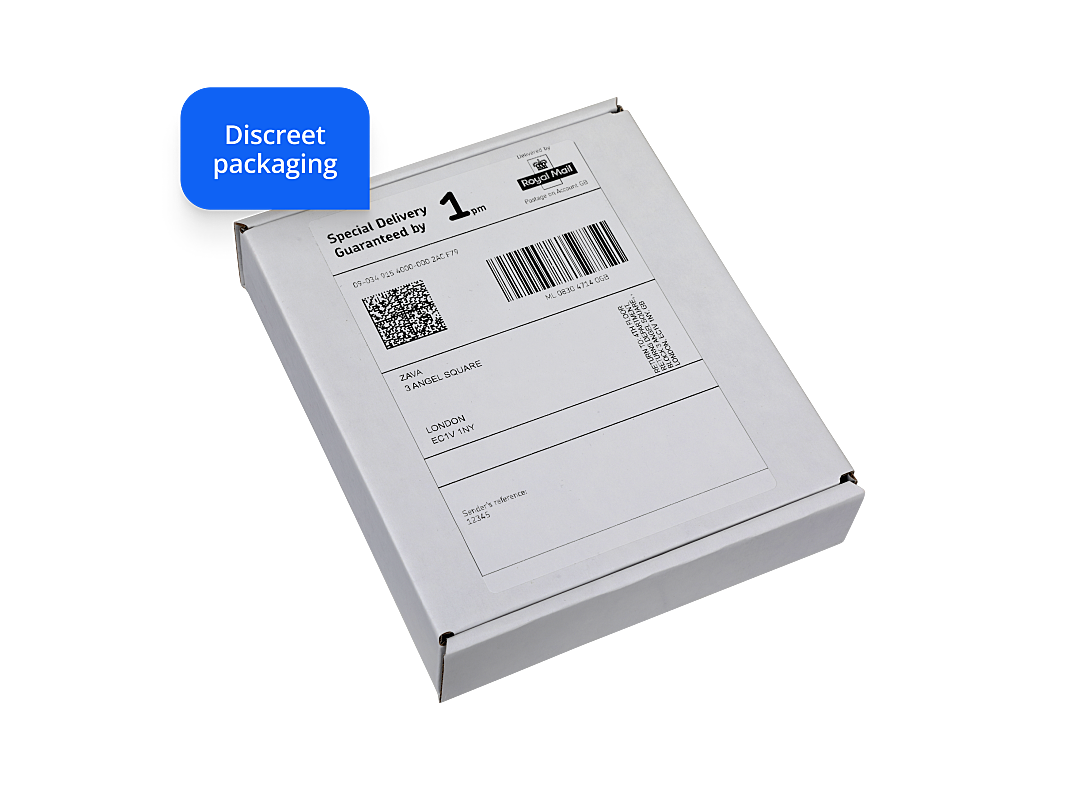
- If it is right for you, then it can be posted to your preferred address or you can collect it from a local Post Office instead.
Can I buy Canesten duo over the counter?
Yes, you can buy Canesten duo over the counter at pharmacies. You may need to talk to a pharmacist who will ask you a few questions to make sure it’s a suitable treatment for you. You can also request it online from services like ZAVA without needing a prescription or a face-to-face appointment with a doctor.
Can I get Canesten duo on the NHS?
Clotrimazole and fluconazole are not commonly prescribed on the NHS as they can be bought over-the-counter. In some cases, such as recurrent thrush, where over-the-counter treatment is not working, a stronger course of treatment may be prescribed by your doctor.
If you are given a prescription for thrush treatment, it may be a generic product.
-
-
Both the cream and capsule are effective treatments for thrush and are widely used. You may experience some side effects when using them but they do not affect everyone.
Common side effects of Canesten oral capsules include:
- headaches
- diarrhoea
- nausea
- rashes
Some uncommon side effects of the Canesten oral capsule include:
- indigestion
- feeling weak
- dizziness
- feeling drowsy
- itching
- dry mouth
- loss of appetite
- constipation
Side effects should only last a few days.
Canesten thrush external cream does not have many side effects but may cause irritation at the application site.
What to do if you get side effects
Most side effects should not last long and can be treated at home. You can manage side effects like:
- headaches by drinking water and taking paracetamol or ibuprofen
- diarrhoea, nausea, and vomiting by drinking water, eating small meals, and avoiding greasy foods
- itching by using antihistamines or having cool or lukewarm baths
If side effects do not go away when you stop treatment you should speak with your doctor.
-
-
Canesten duo is a commonly used medication to treat thrush, however, it may not be suitable for everyone.
You should not use Canesten duo if you:
- have an allergy to fluconazole or clotrimazole
- are younger than 16 or older than 60
- are pregnant or think you are pregnant
- are breastfeeding
- have foul-smelling vaginal discharge
- have sores, blisters or ulcers on, or around, your vagina
- have irregular or abnormal vaginal bleeding
- have lower abdominal pain
- are feeling sick or vomiting
- have diarrhoea
- feel pain or have difficulty when trying to pee
- have liver problems
- have heart problems
Medications
If you are going to use Canesten duo to treat thrush, you should let your pharmacist or doctor know if you are taking other medications, prescribed or not.
You should not use Canesten duo if you are taking the antihistamine terfenadine or the medication cisapride.
Canesten duo may interact with:
- certain medicationsused to treat diabetes, such as gliclazide
- cholesterol treatments such as simvastatin or atorvastatin
- some antidepressants, like amitriptyline
- blood thinning medications, also called anticoagulants
- anti Inflammatory medications like ibuprofen
- some epilepsy treatments, such as carbamazepine or phenytoin
- medication used to treat heart arrhythmias, like amiodarone or quinidine
- certain antibiotics like rifampicin that are used to treat tuberculosis
These medications may interfere with Canesten duo and affect how it works.
Canesten thrush external cream can affect the way some contraceptives work, such as condoms or diaphragms. It is advised to avoid having sex while you have thrush symptoms as they can be worsened.
-
-
Canesten duo is just one option for treating thrush, though if you’re still unsure if it is right for you, there are other alternatives available:
Canesten 2% cream
This is the 2% w/w external cream, containing clotrimazole, that is one part of Canesten duo. It is applied 2 to 3 times a day to the affected area, and will help treat the external symptoms of thrush.
Canesten thrush combi (pessary & external cream)
This comes with a 500mg pessary to treat the internal infection and a 10g tube of 2% w/w cream for external symptoms. The pessary is applied with an applicator in a similar way to the internal cream found in Canesten duo.
Clotrimazole 1% cream
This is a lower-strength version of the external cream found in Canesten duo that treats the symptoms of thrush.
Fluconazole
This is the same antifungal tablet found in Canesten duo, which can treat the cause of the infection and help clear up external symptoms. It can be taken on its own, without the external cream, though the cream is often used alongside it to soothe external symptoms until the tablet has had time to work and get rid of the infection.

Brenda studied medicine at St Georges University of London and has most recently worked in John Radcliffe Oxford University Hospitals, covering acute and general medicine.
Meet our doctorsLast reviewed: 27 Jun 2025
-
Common questions about fluconazole, NHS [accessed 25 April 2025]
-
How and when to take fluconazole, NHS [accessed 25 April 2025]
-
How and when to use clotrimazole for thrush, NHS [accessed 29 April 2025]
-
Thrush Duo Oral and Cream, emc [accessed 26 April 2025]
-
Who can and cannot use clotrimazole for thrush, NHS [accessed 26 April 2025]




 Secure payment


