Mounjaro injections
In stock
from £148.99

Prices matched or beaten*
Feeling disappointed after a period of good weight loss progress ends is normal. You may hit times when the amount of weight you’re used to losing begins to shrink, or there is suddenly no weight loss at all. This is called a ‘weight loss plateau’.
Alternatively, if you’ve recently started Mounjaro and you haven’t seen any weight loss yet, this can also be frustrating. Weight loss does take time but you may not know what to expect or how long to wait for results.
In this guide, we will look at 12 different reasons why your weight loss on Mounjaro may not have started yet, may have slowed, or has plateaued, what you can do about it, and when you may need to see a doctor.

Last reviewed: 28 Oct 2026

We compare MedExpress and Bolt's listed plans weekly so you don't have to. T&Cs apply
There are many reasons why you might not be losing weight on Mounjaro. This can vary from not being on the treatment long enough to have an effect, to not making the necessary lifestyle changes needed for the medication to be effective.
Here are 12 of the most common reasons why you may not be losing weight on Mounjaro.
Starting your weight loss journey on Mounjaro will not produce instant results. You may notice a little weight loss at first, but it may take around 12 weeks or more before you begin to see a significant amount of weight loss. Mounjaro is intended to be a long term weight loss medication with clinical trials studying its effects for at least 72 weeks.
Your starting dose may not produce much weight loss, it is typically used to help your body get used to the medication.
With a 12-week period designed to get your body used to the medication, expect lower weight loss within the first few months. Studies show that the average weight loss in the first 4 weeks is 2% to 4% of your starting body weight, but this can vary from person to person.
Mounjaro has two maintenance weight loss doses: 10mg and 15mg. These are designed to maintain continued weight loss. It takes at least 12 weeks to get to the 10mg maintenance dose and 21 weeks to get to 15mg. If you are taking a lower dose, or have not reached the most effective dose for you, your weight loss results may not be what you expect until you reach a high enough dose.
Check that you are aware of the Mounjaro dosing schedule and the time it may take to reach your maintenance dose or the most effective dose for you.
Taking your dose late or missing a dose should not interrupt your schedule too much, but it can increase your appetite. If you are consistently late or missing doses, you should contact your doctor for advice.
If the day you have decided to take your dose is causing you to be late or miss a dose, consider changing the day to a more convenient one. Setting a recurring alarm or phone reminder for the day of your dose can also help you stay on track.
To lose weight on Mounjaro you need to be in a calorie deficit, which means consuming fewer calories than you burn. Mounjaro makes this easier by suppressing your appetite, so you naturally feel like eating less, which can make your calorie deficit more achievable.
Aim to reduce your daily calorie intake by 600 calories. Use our free calorie deficit calculator to find out how many calories you need to eat to achieve this deficit.
Consuming a diet that is high in processed foods can increase your calorie intake, making it harder to achieve a calorie deficit. For example, habits that can stall your progress include eating a lot of ready meals, take aways, or calorie-dense foods like full-fat dairy products.
Look to see if the foods you are eating are processed or high in calories, if they are, try making healthy swaps. Examples could include swapping high calorie snacks, like pastries, sweets, and crisps for a piece of fruit or a handful of nuts and seeds. Use our Mounjaro diet plan to help you plan healthy meals and snacks that will support your weight loss.
Prioritising protein and resistance training while losing weight on Mounjaro is important to protect and preserve your muscle mass and encourage your body to burn fat rather than muscle.
Eating protein and doing resistance training can ensure you will lose only body fat.
Protein protects muscles by helping them repair and grow after exercise. Incorporating protein into your diet is the only way you can get it, so it is important to eat foods like poultry, lean meats, fish, seafood, edamame beans, lentils, peas, and beans.
Resistance exercises don't have to just happen in the gym. Even 15-minute sessions of resistance training can happen at home. Resistance exercises include pushups, squats, using free weights, or anything that where your muscles are resisting against a force.
Alongside a healthy diet, exercise is important for increasing the number of calories you burn each day. Ideally, you should aim to complete at least 150 minutes of exercise each week, including 2 strength training sessions.
Even before exercise, look at how much you are actually moving around. There are many daily tasks that you can include in your daily movement, such as:
The way Mounjaro works means it slows digestion and causes your gut to absorb more water than usual. This can lead to dehydration, hard stools, constipation, and feeling backed up or bloated. All of these can make you feel sluggish and make sticking to your diet plan more difficult.
Taking small sips of water throughout the day will help you stay hydrated. You can also add in some electrolyte drinks as these can help you rehydrate and retain fluids. Try to avoid caffeinated drinks and alcohol, since these will increase your risk of dehydration.
Consuming alcohol on a regular basis while you are taking Mounjaro will make your weight loss journey more difficult and could stall your progress. Alcohol contains around 7 calories per gram, and this can vary per drink choice. This can silently contribute to your daily calorie intake and could take you out of a calorie deficit.
Poor sleep and stress can impact your progress with Mounjaro, because they can alter your hormone levels causing you to eat more or making you more likely to choose unhealthy foods. For example, stress and tiredness leads to an increased production of cortisol, a stress hormone, which can increase your appetite and trigger cravings.
A meal which contains protein, healthy fats, and complex carbohydrates will help stabilise your blood sugar, keep your cortisol levels within a normal range, and will help you sleep.
Reduce or stop your consumption of caffeine based drinks at least 6 hours before you go to bed.
Try a relaxation routine before bed to help you wind down, such as reading a book, taking a warm bath, meditating, or limiting screen time.
If you are taking a medication that promotes weight gain, it may counteract the benefits of Mounjaro. Certain medications can:
Speak to your doctor about the medications you are taking and if they may be stopping Mounjaro from working as it should. Ask your doctor if there are any alternative medications that act differently rather than causing weight gain.
A weight loss plateau is common on most weight loss journeys and is when you don’t lose weight or you stay at the same weight for 3 weeks or more. As you reduce your calorie intake and burn fat, over time your body will reach a point where it burns fewer calories, due to you being lighter. As your size and weight drops, you may need fewer calories than before.
You can recalculate what daily calorie requirements are for your current weight by using our free calorie deficit calculator. You can do this by entering your new current values and you will be provided with a new daily target that will help you continue safely on your journey.
You may need to increase the amount of exercise or number of reps you are doing each week to burn more calories.
Make sure you are still making healthy food choices, and avoiding high fat, greasy, and processed foods.
Your weight loss journey will be individual to you, but average weight loss values from the SURMOUNT-1 trials are as follows. Scroll to explore average weight loss on Mounjaro week by week, depending on your dose:
Swipe sideways to view full weekly timeline →
Depending on your dose and where you are at in your journey, there are reasons why you may not be losing weight or seeing changes. Here is a dose-by-dose overview on the facts behind your stalled progress and what to do about it.
The 2.5mg dosage of Mounjaro is not designed to make you lose a lot of weight, but to help you get used to the medication at the start. You may notice some changes to your appetite, and even some weight loss on this starter dosage, but noticeable weight loss is typically seen at the higher dosages of 5mg and above (and after 5 to 8 weeks of treatment).
Do not be disheartened if you’re not seeing results early in your treatment plan, especially in the first few weeks.
The 5mg dosage is the first dose of Mounjaro, which is designed to help you lose weight, and it’s where many people start to see consistent weight loss results. If you’re not seeing the scales move after a few weeks at 5mg, then there are a few reasons why this may be happening.
Firstly, your body may still be adjusting to Mounjaro. This is still a low dose of the medication, and it may be the case that it’s not a high enough dosage to see noticeable effects.
Secondly, this medication works most effectively alongside healthy lifestyle changes, and you may not be in a consistent routine this early into your journey. This is when you should start implementing healthy habits and make sure you’re in a calorie deficit.
If you are not seeing weight loss results at 5mg of Mounjaro, it is not a cause for concern. The 5mg dosage is usually a stepping stone to the higher dosages, to get your body used to the medication.
7.5mg is the mid-level dosage of Mounjaro, and you should be seeing results at this dose. If you have not seen weight loss at this dose, or your weight loss has stalled, then you should investigate.
If you were seeing results at lower dosages, but your weight loss has stalled at 7.5mg, then it may be that you are no longer in a calorie deficit. You should recalculate how many calories you need to eat to stay in a calorie deficit, as this changes as you lose weight.
If you have been taking Mounjaro up to the 7.5mg dosage and still have not lost weight, you should speak to a doctor to see whether the medication is right for you. While Mounjaro is an effective medication for most people, it does not work for everybody. A doctor may be able to recommend other weight loss strategies or other medications that are more suitable for you.
10mg is a high-level dose of Mounjaro, so it can be frustrating to see weight loss progress stall at this stage. By this point, your body may also be getting used to Mounjaro, which means you may not achieve weight loss as ‘easily’ as earlier on in your treatment.
As you lose weight, your metabolism slows down, which can cause a weight loss plateau. This means that the calorie deficit that worked for you at lower doses may not work any more, and it’s simply maintaining your current weight instead.
At this dosage, it can be helpful to recalculate your calorie deficit using your current weight, not your starting weight, and adjust your calorie intake accordingly. You can also try and break through the weight loss plateau by changing up your exercise routine, such as introducing strength training, which can help build muscle and burn fat. As you lose weight and exercise more, you may need to increase your reps or switch up your workouts to continue losing weight.
12.5mg is the second-highest dose of Mounjaro, and is where you should be seeing significant weight loss. If you are not seeing results, then it is time to look at improving the lifestyle changes you are making in addition to using Mounjaro.
Often, the medication is working, but hidden calories can be preventing you from achieving a calorie deficit. Tracking everything you consume can help you find hidden calories you may not have been aware of, such as in drinks, sauces, and oils.
Another possible cause is body recomposition. If you have been exercising, then you may have been building muscle while losing fat. This means that while you are getting healthier and your body shape is improving, you will not be losing weight because muscle is denser. At this stage, it may be beneficial to look at the progress you are making off the scale, such as energy levels, how clothes fit on you, and body measurements.
You may want to speak to a doctor about whether moving up to 15mg is the right step for you, as long as you have been taking 12.5mg for 4 weeks. If you are comfortable at your current weight, then you could continue to take 12.5mg as a maintenance dose.
If you’re not losing much weight on a higher dose of Mounjaro, such as 15mg or 12.5mg, then it’s important to speak to your doctor to re-evaluate your treatment options. It could be that you’ve reached a weight loss plateau, that you’re not in a calorie deficit, or that the medication is not the right option for you.
Mounjaro starts working for weight loss as soon as you take the first dose. Some people notice a reduction in their appetite within 24 to 72 hours. However, you may not notice any weight loss for several weeks or until you reach a dose that is effective for you.
In clinical trials, the highest 15mg Mounjaro dose resulted in an average weight loss of 22.5%, but the results can vary from person to person depending on their lifestyle, age, and how their body responds to the medication.
If you are taking Mounjaro and not seeing the results you expected despite making the necessary changes to your lifestyle and following the dosing schedule, you may need to speak to your doctor about stopping Mounjaro or switching to an alternative weight loss medication.
Speak to your doctor if you:
“If your Mounjaro dose is causing you side effects that are interfering with your daily life, you may need to lower the dose or switch medication. However, this could affect your weight loss progress. If you stop Mounjaro for a long period, you may need to restart from the lowest dose and you may gain weight again in the process. Remember Mounjaro is an effective weight loss medication, but you will need to implement healthy lifestyle changes in order to maximise its benefits. If you have any major concerns or you feel your medication is not working, speak to a doctor immediately.”

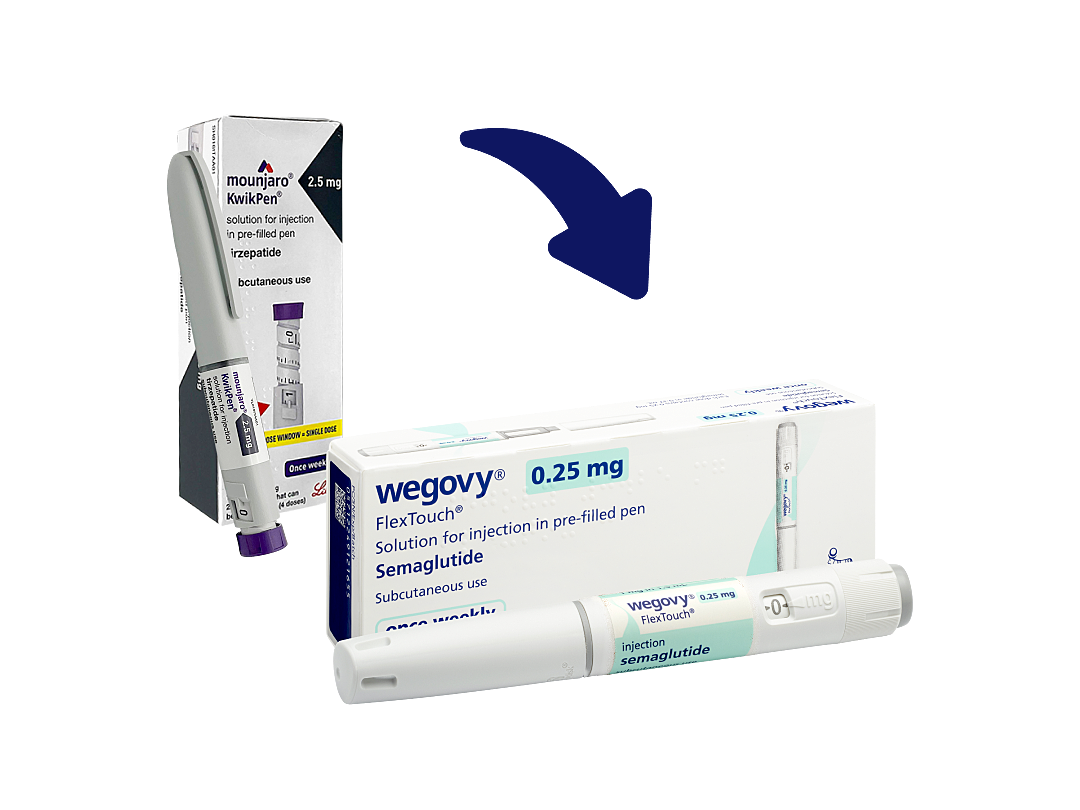
Mounjaro isn’t the only weight loss medication available, and if it is not effective for you, you may need to discuss switching to an alternative. At ZAVA, we offer both GLP-1 injections and pills, depending on your preferences.
Wegovy Injection
This is a weekly injection that contains semaglutide. Average weight loss of 21% with a 7.2mg dose after 72 weeks.
Nevolat Injection
This is a daily injection that contains liraglutide. Average weight loss of 8% with a 3mg dose after 56 weeks.
Wegovy is available in doses 0.25mg, 0.5mg, 1mg, 1.7mg, 2.4mg and 7.2mg.
Overview:
The STEP clinical trials found the Wegovy 7.2mg dose to help patients lose an average 21% of their starting weight in 72 weeks.
Nevolat is a branded liraglutide, previously known as Saxenda.
Overview:
Based on clinical study data, Nevolat is less effective than Mounjaro and Wegovy but some patients find it is effective. It is a weight loss injection alternative that has a different routine to the weekly injections.
Wegovy Pill
This is a daily pill that contains semaglutide. Average weight loss of 17% taking 25mg dose after 64 weeks.
Foundayo
A pill taken daily containing orforglipron. Average weight loss of 12.4% taking a 17.2mg dose after 72 weeks.
Wegovy pill is the oral form of semaglutide. It is available in doses 1.5mg, 4mg, 9mg, 25mg.
Overview:
The OASIS trials found that the Wegovy pill can help patients lose an average 17% of their starting weight in 64 weeks on the 25mg dose (maximum maintenance dose).
Foundayo is an oral GLP-1 tablet containing orforglipron. It works in a similar way to the Wegovy pill, it is just absorbed differently which means that there are no food or drink requirements to taking it. It is available in doses 0.8mg, 2.5mg, 5.5mg, 9mg, 14.5mg and 17.2mg.
Overview:
The ATTAIN trials found that the Foundayo can help patients lose an average 12.4% of their starting weight in 72 weeks on the 17.2mg dose (maximum maintenance dose).

See Treatment Details
See Treatment Details

See Treatment Details

See Treatment Details

See Treatment Details

See Treatment Details
Showing {shown} of {total} results

Please check your spelling or try another treatment name.
You’re likely still adjusting to the medication. If you have a greater appetite than you expect to on Mounjaro you could be on a dose that is a starter dose, or your body is still adjusting to the medication. There may also be a point at when your next dose is due and your hunger cues begin to return. Allow at least 4 or 5 weeks for your body to adapt. If you are concerned, speak to your doctor.
Gaining weight on Mounjaro usually happens for several reasons. These include, consuming more calories than you are burning, water retention, remaining on a low dose, not exercising enough, or not making the necessary lifestyle changes. If you are gaining weight on Mounjaro and have followed the dosing schedule correctly and improved your lifestyle, contact your doctor for further advice.
It depends. How much weight you can lose with Mounjaro depends on several factors, including how your body responds to the medication, your lifestyle, and how closely you follow the dosing schedule. The average weight loss on Mounjaro is 22.5% of your starting body weight on the highest dose. If you haven’t lost at least 5% after 6 months at your highest tolerated dose, speak to your doctor about whether to continue.
It depends. You will need to recalculate your daily calorie intake if you have reached a weight loss plateau. This is because you will have reached your goal weight, or your metabolism has adapted to your new weight. Before considering a dose change, it’s worth reviewing other possible causes of a plateau. If you follow a new calorie deficit and still find you are not experiencing progress, it may be time to speak to your doctor about whether to change your dose, or adjust treatment method.
Yes, the starting dose of Mounjaro is 2.5mg. This dose is intended to introduce the medication into your body and help you get used to it, reducing the chance of side effects. Some people lose a little weight in this period but it will vary from person to person.
Find out how we support you with keeping the weight off with our maintenance service.
Medical Editor
Brenda studied medicine at St Georges University of London and has most recently worked in John Radcliffe Oxford University Hospitals, covering acute and general medicine. Before her medical career, Brenda was a medical scientist in microbiology working in several NHS diagnostic laboratories across England. She has also completed her Masters in Public Health and MSc in Genomic Medicine. She is currently a GP registrar.
Last reviewed: 28 Oct 2026
Our doctors are regulated by the CQC and GPhC, the same bodies overseeing NHS care.

Medical Director

Clinical Lead for Service Expansion

Online Doctor