Pelvic inflammatory disease

Medically reviewed by
Dr Zoe MillerLast reviewed: 28 Apr 2025
Pelvic inflammatory disease (PID) is a fairly common condition that is believed to affect around 1 in 50 sexually-active women in the UK each year. In this guide, you’ll learn about what PID is, common signs and symptoms, along with how to get diagnosed and treated.

Key takeaways
Pelvic inflammatory disease (PID) is a genital infection that is more common in young, sexually-active women
PID can have a number of symptoms affecting the stomach area, discharge, urination, sex, and your periods
PID is usually caused by bacterial infections in the vagina that then spread to your cervix and higher (e.g. womb and fallopian tubes)
PID can be a serious disease, which is why it’s important to diagnose and treat with antibiotics
PID can go on to affect your fertility and can cause complications if it occurs during pregnancy
What is PID?
Pelvic inflammatory disease (PID) is a bacterial infection of the upper genital tract, which includes the womb, ovaries, and fallopian tubes.
PID is thought to be very common. It mostly affects people aged 15 to 24 who are sexually active. It can be tricky to diagnose, but if you notice any symptoms or signs of pelvic inflammatory disease or have any severe pelvic pain, you should speak to your doctor.
If you catch the signs early enough, it can be treated quickly and easily with antibiotics. In rarer cases (around 1 in 10), PID can lead to infertility or problems with pregnancy.
— Dr Zoe Miller, Medical Editor.Pelvic inflammatory disease can be serious. However, if it gets treated early, the condition can usually be cured quickly and easily, and you can avoid the potential long term effects. I’d always urge anyone to see their doctor as soon as possible if they have PID symptoms.
What causes pelvic inflammatory disease?
In most cases, PID is caused by a sexually transmitted infection (STI) such as chlamydia or gonorrhoea. In a small number of cases (less than 15%) it’s caused by other types of bacteria that live in the genital tract.
There is some evidence that PID could be related to bacterial vaginosis. Bacterial vaginosis (BV) is caused by changes in the natural balance of bacteria in your vagina and leads to unusual vaginal discharge. However, there isn’t currently enough evidence to say whether you can get pelvic inflammatory disease from BV.
Some women get pelvic inflammatory disease after a miscarriage or a childbirth where there was damage to the cervix. This may mean bacteria that are harmless in the vagina can get into other parts of the body where they could cause an infection.
Certain medical procedures, including abortions, womb inspections, or insertion of an intrauterine device (a ‘coil’), may also allow bacteria to spread from the vagina into the cervix, consequently causing PID.
What are the symptoms of pelvic inflammatory disease?
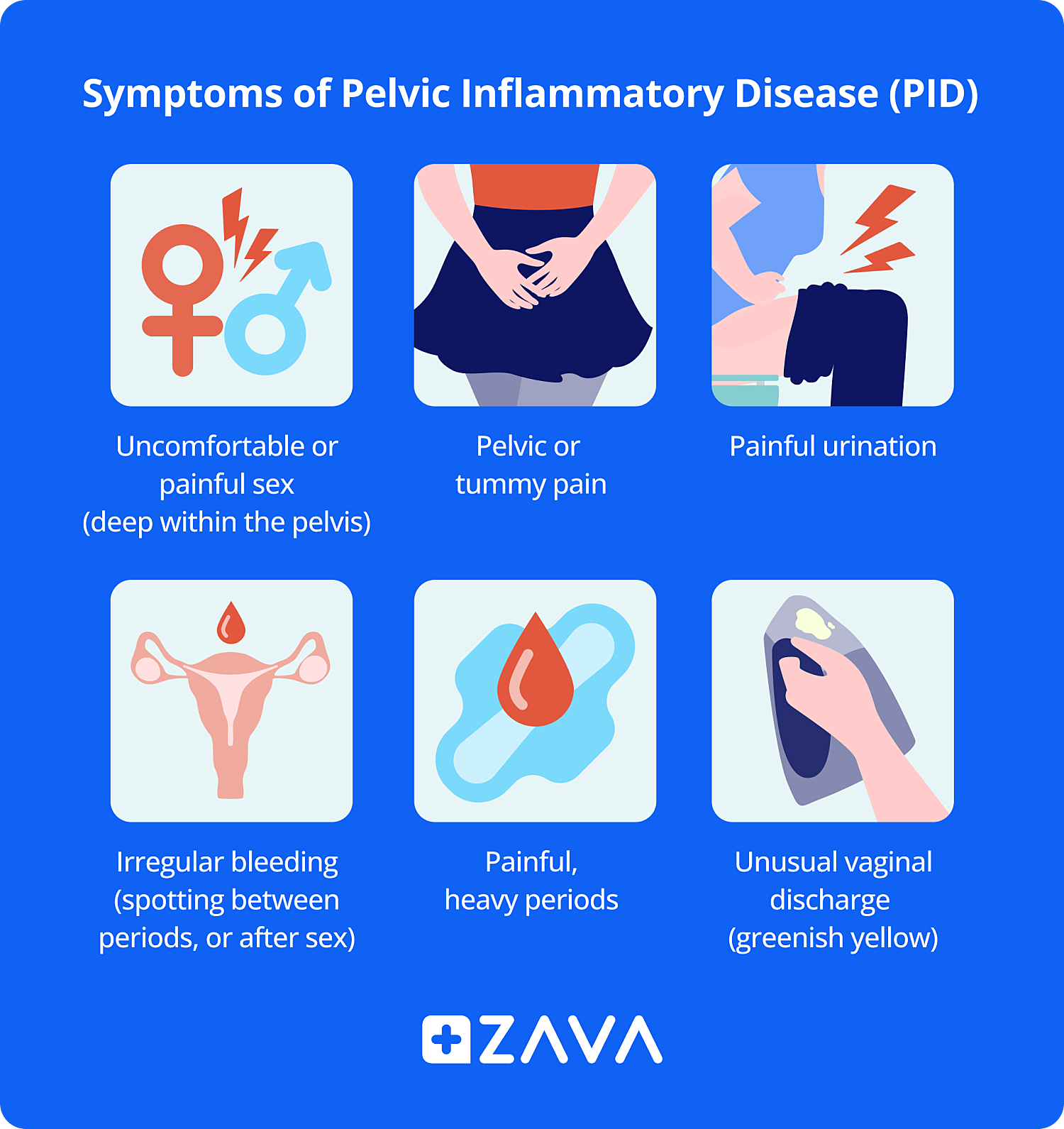
Quite often, PID won’t have any obvious symptoms. However, most people with PID will experience one or more of the following, mild symptoms:
- painful or uncomfortable sex (deep within the pelvis)
- pelvic or tummy pain
- painful urination
- irregular bleeding (spotting between periods, or after sex)
- painful, heavy periods
- unusual vaginal discharge (greenish yellow)
A small number of women will have more severe symptoms, such as:
- nausea
- vomiting
- high temperature or fever
- extremely painful lower abdomen (tummy)
If you have any severe pain, you should seek medical attention from your local hospital as soon as possible.



No results found.
Please check your spelling or try another treatment name.
How is pelvic inflammatory disease diagnosed?
Testing for PID can be tricky. Diagnosing pelvic inflammatory disease may be difficult because often people do not even experience symptoms, and sometimes symptoms of PID are mistaken for symptoms of other conditions. This is why it is important to visit a doctor as soon as you experience any PID symptoms so that you can get a full diagnosis.
It’s also a good idea to get tested for STIs after a new sexual partner, even if you don’t have symptoms. This can help check for long-term infections that can lead to PID if untreated.
What typically occurs when you go to a doctor for a PID diagnosis:
- you will discuss your symptoms with your doctor
- they will carry out a physical examination to test for tender areas in your vagina and for abnormal discharge – this can involve using a speculum to look inside the vagina or placing gentle manual pressure inside the vagina and on the abdomen to check for pain and tenderness
- they will likely take swabs from your cervix and vagina
- they may take blood tests or ask you to do a pregnancy test
The results from swabs do not always provide a definitive diagnosis and it’s common for people with PID to get negative swab results. Your GP may also suggest getting tested for STIs at a clinic or by using an at-home test kit if they’re unable to provide this service.
Sometimes, pelvic inflammatory disease may show on an ultrasound. A scan will be done to create a picture of the inside of your pelvis, and this may (but not always) show signs of PID.
One of the most reliable ways to reach a pelvic inflammatory disease diagnosis is by performing a laparoscopy (‘keyhole’ surgery), although this is usually only done in severe cases when the diagnosis is unclear. Two small cuts are made in your abdomen near the belly button and above your bikini line, and a camera called a laparoscope is inserted into this area. The surgeon can then look at your internal organs and take tissue samples.
Your doctor should be able to recommend and provide the most suitable diagnosis and treatment pathway based on your symptoms and overall health. In most cases, if PID is suspected, your GP will usually start you on antibiotic treatment immediately to prevent long-term complications, even before test results are available. STI screening may be advised beforehand, but treatment should not be delayed.
Most people can be managed in primary care with antibiotics, pain relief medications (such as paracetamol or ibuprofen), STI testing, and support for notifying sexual partners. You will also be advised to avoid sexual activity until treatment is completed and symptoms have resolved.
However, your doctor will arrange urgent hospital admission if:
- you are pregnant or an ectopic pregnancy is suspected.
- you have severe symptoms or complications, such as a suspected tubo-ovarian abscess.
- you are very unwell or the diagnosis is uncertain.
- you are unable to tolerate treatment in primary care.
You may also be referred to a specialist if you have conditions like HIV, or if you have an IUD (coil) fitted and your doctor detects certain types of bacteria during a cervical screening.
It’s completely normal to feel overwhelmed or worried when getting a diagnosis and treatment. However, an early diagnosis and starting the right treatment as soon as possible is very important to protect your health in the long term. Speak to your healthcare provider if you have any questions or concerns.
Can you treat PID?
Yes, there are effective pelvic inflammatory disease treatments. If you catch it in an early stage, PID can be treated very simply with antibiotics. This will usually include a combination of different antibiotics, and will last for around two weeks. Make sure you take your medication as directed by your doctor, and finish the whole course of treatment.
Tell your doctor if you’re pregnant before taking antibiotic treatment because certain antibiotics should not be taken during pregnancy.
Avoid having sex while you’re taking the antibiotics to help your infection clear up as easily as possible. You should also tell any recent sexual partners you might have had so that they can get tested and treated. This will stop the infection being spread to anyone else.
Treatment for pelvic inflammatory disease
Antibiotics are the main type of pelvic inflammatory disease medication. The doctor will recommend the best antibiotic for pelvic inflammatory disease for your situation, depending on your medical history and the type of bacteria that’s causing your PID.
Some of the common antibiotics that are used to treat pelvic inflammatory disease include a combination of:
- doxycycline
- metronidazole
- ceftriaxone
- moxifloxacin
Often, it’s possible to take these at home (typically, they’re taken twice per day for 14 days). In some cases, a single-dose antibiotic injection (such as intramuscular ceftriaxone) may also be given to you in the surgery.
If your symptoms are severe, if you’re pregnant, or serious complications are suspected, you may be admitted to the hospital for treatment. In hospital, antibiotics are usually given through a drip (IV) several times a day.
Follow-up care is very important. Your doctor will arrange a check up to see if your symptoms are improving, usually within 48 to 72 hours. If you have an intrauterine device (IUD) and symptoms don’t improve, it may need to be removed. You’ll also be advised to complete the full course of antibiotics, ensure your sexual partners are treated, and take steps to protect against future infections.
Can pelvic inflammatory disease be cured?
Yes, PID can be cured and is treated effectively with antibiotics in most cases. However, it’s possible for it to come back, especially if it’s not treated correctly.
The complications of PID sometimes cannot always be cured. For example if there’s damage or scarring to the fallopian tubes, this can cause long term fertility issues.
Can you prevent PID?
You can’t prevent PID from happening completely. However, you can protect yourself against sexually transmitted infections (STIs) that could cause PID in the future.
The best way to protect yourself against STIs is by using condoms with any new sexual partners. It’s impossible to tell if someone has an STI just by looking, and lots of people can have an STI without any symptoms. Regular testing and practicing safe sex can help you to catch any STIs early and get treated before they lead to PID.
What are the effects of pelvic inflammatory disease on pregnancy?
Having PID can increase your chances of having what’s known as an ectopic pregnancy. This is when an embryo implants into the fallopian tubes instead of the uterus, and cannot properly develop into a viable foetus. Ectopic pregnancies can be serious, often leading to miscarriage and sometimes causing your fallopian tube to rupture, which requires emergency medical attention.
While this can happen in people without pelvic inflammatory disease, PID does make it more likely due to inflammation and scarring of the fallopian tubes. This makes them narrower and means that it’s more difficult for the egg to pass through from your ovaries into the womb and develop into a normal, healthy pregnancy.
If you are worried about PID and pregnancy, talk to your doctor for more information and reassurance. In the vast majority of cases, women who have been treated for PID are able to get pregnant without any difficulties at all.
How long does it take for PID to affect your fertility?
Only around 1 in 10 people with PID will have problems with fertility. It’s usually only women who’ve had multiple (recurrent) episodes of PID, or who’ve left their symptoms untreated for a long time, who have difficulty getting pregnant after having PID.
The sooner you catch the symptoms of PID, and the quicker you have treatment, the better your chances of a speedy recovery.
What is the risk of pelvic inflammatory disease infertility?
Studies suggest that women with a history of pelvic inflammatory disease (PID), even without noticeable symptoms, have a 5 times greater risk of infertility. The risk is higher if:
- the PID was originally caused by chlamydia
- treatment for PID was delayed
- there are repeated episodes of PID
- the PID is severe
This is why it’s so important to catch and treat PID early. Although a history of PID may increase your chances of infertility, it doesn’t necessarily mean it is impossible to get pregnant. If you have concerns about fertility, we’d strongly recommend speaking to your GP. If you meet certain criteria, they can refer you to a fertility specialist (reproductive endocrinologist).
Pelvic inflammatory disease and endometriosis
Although endometriosis and PID are different conditions, they share many symptoms in common, including:
- pelvic pain
- pain during sex
- severe period pain
Women with endometriosis may be at a greater risk of developing PID as anatomical changes caused by endometriosis may make it easier for bacteria to spread and cause inflammation.
There is also evidence that women with endometriosis who also have PID, may experience more painful symptoms. There are treatments that can work effectively or help manage the pain, including pain medication or, in some cases, surgery.
Taking action on pelvic inflammatory disease
PID is a serious condition that can cause real pain and discomfort. However, it can be treated effectively with antibiotics and other treatments. Speak with your doctor to discuss treatments today.
If you’re struggling with chronic pelvic inflammatory disease, you can also contact charities like the Pelvic Pain Support Network for help dealing with the physical and mental impacts of the condition.

After completing her first degree, she went on to study graduate-entry medicine at Warwick University. After graduating as a doctor, she worked within the West Midlands in Urology, Respiratory Medicine, Infectious Disease, and Psychiatry before transitioning into a full-time medical communications role.
Meet our doctorsLast reviewed: 28 Apr 2025
-
Pelvic inflammatory disease, National Health Service [accessed February 2025]
-
Pelvic Inflammatory Disease (PID) – CDC Basic Fact Sheet, Center for Disease Control and Prevention [accessed February 2025]
-
Pelvic inflammatory disease: Clinical manifestations and diagnosis, UpToDate [accessed February 2025]
-
Pelvic inflammatory disease, NICE/Clinical Knowledge Summaries [accessed February 2025]
Cystitis bladder infections are caused by bacteria and need to be treated with antibiotics. ZAVA offers a variety of treatment through a convenient, discreet service.








 Secure payment


