7-day protein diet plan for fast weight loss
If you're looking to lose weight in a sustainable, healthy way, a high-protein diet can be very effective. Our 7-day high-protein diet plan is designed not only to help you burn fat but also to maintain muscle mass, boost metabolism, and reduce hunger cravings.
In this guide, we’ll look at how high-protein diets support weight loss, break down the 7-day meal plan, and provide you with some tips to make the most out of your high-protein diet.

Medically reviewed by
Dr Crystal WyllieLast reviewed: 12 Mar 2026
What's on this page?
- 1. What is a high-protein diet?
- 2. The benefits of a high-protein diet
- 3. How does a 7-day protein diet work?
- 4. 7-day protein diet plan for weight loss
- 5. 7-day vegetarian protein diet plan for weight loss
- 6. High-protein foods for weight loss
- 7. Can protein help you burn fat?
- 8. Factors to consider when following a 7-day, high-protein diet plan
- 9. Start your weight loss with a high-protein diet
- 10. Need some help with your weight loss goals?
- 11. Frequently asked questions
What is a high-protein diet?
A high-protein diet focuses on increasing your protein intake, meaning that it makes up around 25 to 30% of your daily calories. Protein is an essential nutrient that supports many functions in the body.
When you increase the amount of protein you eat, your body burns more calories during digestion, which can help boost your metabolism (the process by which your body turns food and drink into energy). Protein can also help keep you feeling fuller for longer, so you may be less likely to overeat.
Unlike diets that focus solely on cutting calories, a high-protein approach offers a balanced, nutrient-dense way to lose weight while maintaining energy levels and muscle mass.
Whether you’re trying to burn fat, build lean muscle, or simply eat healthier, increasing your protein is a very effective strategy.
The benefits of a high-protein diet
A high-protein diet has many proven benefits for weight loss, making it a good choice if you’re looking to lose weight.
Boosts metabolism
Protein has a higher thermic effect than fats and carbohydrates, meaning your body burns more calories while digesting protein-rich foods. This can help you burn more calories even while resting.
Can help reduce appetite and hunger
Protein can also regulate hunger hormones like ghrelin, keeping you feeling full for longer. When you’re less hungry, you may find it easier to avoid overeating or snacking on foods that are less nutritionally balanced.
Preserves muscle mass
When you lose weight, you will want to lose fat, rather than muscle. Eating protein is key to preserving lean muscle mass while your body burns fat.
Changes in body composition
Higher protein intake encourages your body to burn fat as fuel instead of muscle. Studies have shown that high-protein diets can significantly improve body composition, leading to a leaner physique.
How does a 7-day protein diet work?
The idea behind a 7-day protein diet is to kickstart your weight loss journey by providing your body with the fuel it needs to burn fat and stay energised while also helping to reduce your cravings.
Here’s how it could work for you:
Protein promotes fat burning
By prioritising protein, your body becomes more efficient at burning fat while preserving muscle.
Sustained energy
Protein-rich foods can help stabilise blood sugar levels, providing consistent energy throughout the day. This means you may not have the energy crashes that can follow carb-heavy meals.
Easy to follow
The 7-day plan provides a structured approach that’s simple to follow. It encourages balance – incorporating protein, healthy fats, and a small amount of carbs – so you will not feel deprived.
7-day protein diet plan for weight loss
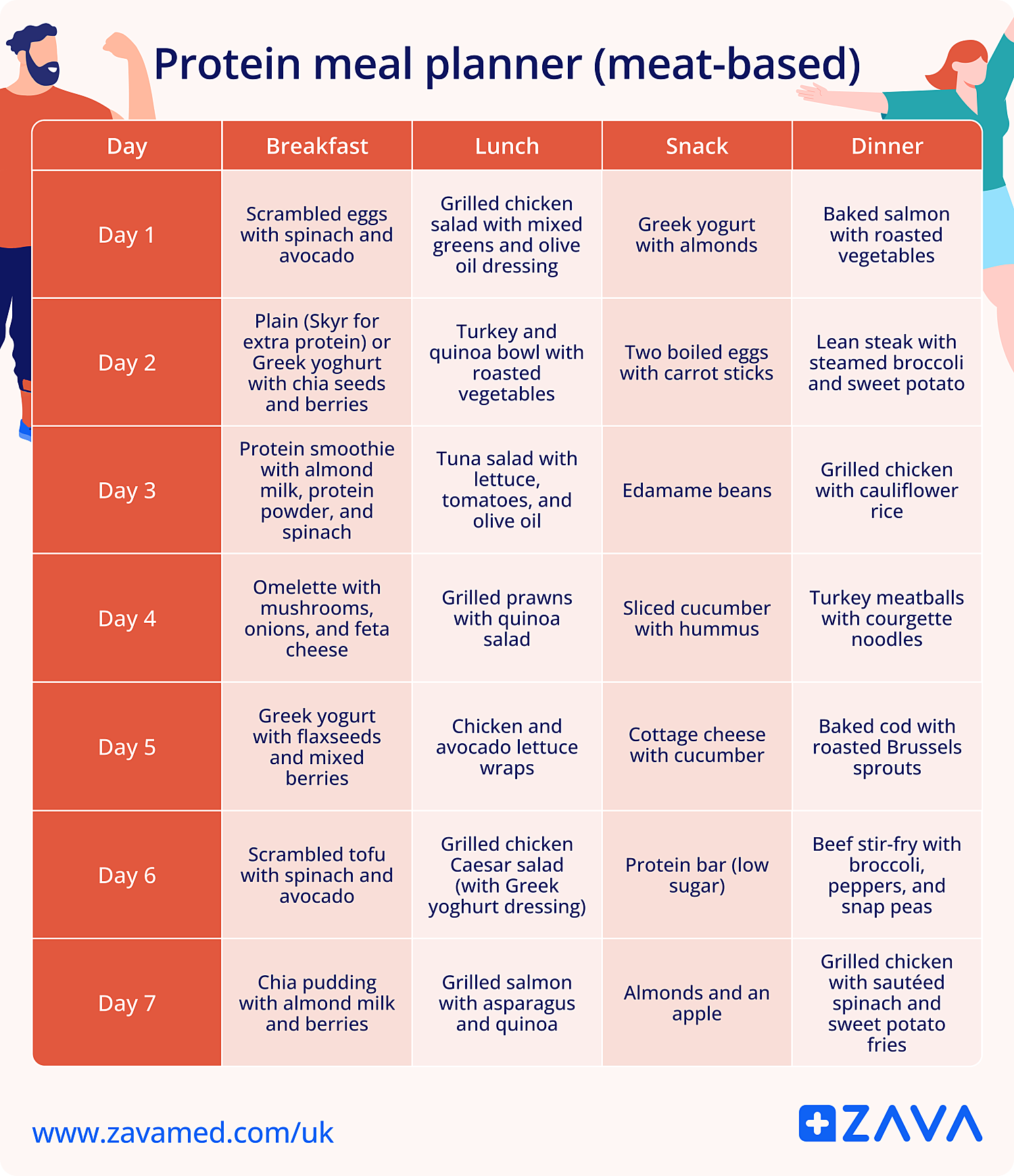
Here is a detailed, easy-to-follow 7-day protein diet plan designed to help you lose weight without feeling hungry or restricted. Each day includes 3 balanced meals and a snack to ensure you stay energised and satisfied.
➤ Use our protein calculator to estimate how much protein you need each day based on your weight, goals, and activity level, and adjust portion sizes to suit you.
7-day vegetarian protein diet plan for weight loss
If you follow a vegetarian diet, you can still enjoy the benefits of a high-protein eating plan. This 7-day vegetarian plant-based protein plan ensures you get the nutrients you need while helping you lose weight.

High-protein foods for weight loss
To make the most of your high-protein diet, here’s a list of foods that should be your primary go-to sources of protein:
- animal-based proteins – chicken breast, turkey, lean beef, fish (salmon, tuna) and eggs are all excellent sources of protein
- dairy – Greek yoghurt, cottage cheese and milk provide both protein and calcium
- plant-based proteins – tofu, tempeh, lentils, beans, quinoa, edamame, and chickpeas are great plant-based alternatives
- nuts and seeds – almonds, chia seeds, flaxseeds, and hemp seeds are perfect for snacking or adding to meals
Can protein help you burn fat?
Yes, it can. Protein helps boost your metabolism slightly in a process known as the thermic effect of food (TEF). This means that when you eat protein, your body tends to burn more calories digesting it compared to carbs or fats.
This means your body is working harder to process protein, which in turn can accelerate fat burning. Not only does protein help with fat loss, but it also helps to preserve lean muscle mass, ensuring that most of the weight you lose is fat.
Can you lose weight on a high-protein diet?
Yes, you can. While protein is often associated with building muscle, it’s also a powerful tool for weight loss. By increasing your protein intake, you feel fuller for longer, which helps reduce overall calorie consumption. Check how many calories you need to be in a deficit with our calorie deficit calculator.
Factors to consider when following a 7-day, high-protein diet plan
A 7-day high-protein diet plan can be a highly effective way to kickstart your weight loss journey, but there are several important factors to consider to make sure you're doing it safely and effectively.
Here are some key aspects to keep in mind before, during, and after the plan.
Personal health and medical conditions
Before starting any new diet, consider any existing medical conditions you have. A high-protein diet may not be suitable for everyone. If you have any concerns, check with your doctor or a nutritionist to make sure the plan is safe for you.
Balance and variety in protein sources
Variety is important when it comes to protein. Proteins are made of chemicals called amino acids. When you eat foods containing protein, your digestive system breaks them down into their constituent parts and uses the amino acids to make new proteins.
By eating proteins from different sources, including animal-based proteins (chicken, fish, eggs) and plant-based proteins (lentils, beans, tofu), you’ll ensure you’re getting all the essential amino acids and a wide range of nutrients.
Portion control
While protein can reduce feelings of hunger, it’s still important to control portions to avoid overeating. Even though protein helps with fullness, consuming too much can lead to excess calories and potentially slow down your weight loss.
Check how many calories you need for weight loss.
Balance with healthy fats and carbs
Do not forget about healthy fats and carbs. Try to also include sources like avocado, nuts, and vegetables to round out your meals, providing sustained energy and supporting overall health.
Find out how a 7-day low carb plan can help with weight loss.
Hydration and digestion
Increasing your protein intake means your body may need more water to process it. Drink plenty of water to stay hydrated and support digestion, as a high-protein diet can sometimes cause mild constipation or dehydration.
Start your weight loss with a high-protein diet
A 7-day protein diet plan is a simple yet effective way to jump-start your weight loss. By increasing your protein intake, you can benefit from faster metabolism, reduced hunger, and preserved muscle mass, all while burning fat.
The key is to follow a considered plan like this one, stay consistent and make adjustments as needed based on your body’s response.
Need some help with your weight loss goals?
If you're finding it challenging to reach your weight loss goals, you're not alone. With the right support, achieving your goals can become much more manageable.
At ZAVA, we offer a convenient online doctor service where you can speak to a qualified healthcare professional about your weight loss needs. Whether you're just starting out or need help overcoming obstacles, our doctors can provide guidance and recommend a treatment plan that works for you.
You can explore all of our weight loss treatments if you’d like to find out more about your options.
Frequently asked questions
Is a high-protein diet good for weight loss?
Yes, a high-protein diet can be very effective for weight loss. Protein helps to control hunger, boost metabolism, and preserve muscle mass, which can all contribute to fat loss. It’s also beneficial for keeping you full longer, reducing the temptation to snack.
Can I follow this 7-day protein plan if I’m vegetarian or vegan?
Yes, the 7-day protein diet plan can easily be adapted for vegetarians and vegans. Substituting animal-based proteins with plant-based options like lentils, tofu, quinoa and chickpeas will ensure you're still getting enough protein to meet your goals.
How much protein do I need each day?
The amount of protein you need depends on factors like your weight, age, and activity level. For general weight loss, aim for about 1.2 to 1.5g of your body weight per day or 25 to 30% of your daily energy intake. A typical meal plan like the one provided above will help you meet those needs.
Can I eat carbs on a high-protein diet?
Yes, in moderation. A high-protein diet does not mean you have to cut out carbs entirely. Focus on complex carbs like vegetables, brown rice and sweet potatoes, which provide essential nutrients and energy while supporting your weight loss goals.
Will I gain weight if I eat too much protein?
While protein is essential for weight loss, overconsumption of any macronutrient (protein, fats, and carbs) could lead to weight gain if it leads to excess calorie intake. It's important to monitor your portion sizes and ensure you're eating within your calorie needs.

Dr Crystal Wyllie studied at Barts and the London School of Medicine and Dentistry, graduating in 2010. She then completed her training as a GP in hospitals and practices in and around London. Her particular interests are in reproductive, sexual, and women’s health.
Last reviewed: 12 Mar 2026
Sources
Thermic effect of a meal and appetite in adults: an individual participant data meta-analysis of meal-test trials, Food and Nutrition Research [accessed 12 January 2026]
Protein, weight management, and satiety, Science Direct [accessed 12 January 2026]
Clinical Evidence and Mechanisms of High-Protein Diet-Induced Weight Loss, Journal of Obesity and Metabolic Syndrome [accessed 12 January 2026]
Preserving Healthy Muscle during Weight Loss, Advances in Nutrition [accessed 12 January 2026]
Higher Protein Intake Preserves Lean Mass and Satiety with Weight Loss in Pre-obese and Obese Women, Obesity Research Journal [accessed 12 January 2026]
Effect of a High Protein Diet at Breakfast on Postprandial Glucose Level at Dinner Time in Healthy Adults, Nutrients [accessed 12 January 2026]
Further reading on weight loss
- How long does a Saxenda pen last?
- Maintenance hub
- 7 day smoothie diet
- Side effects of Saxenda
- Liraglutide for weight loss
- What is food noise?
- Diabetes medication for weight loss
- BMI verification
- Mounjaro pen malfunctions
- Obesity statistics
- Ozempic for weight loss
- How to store Mounjaro
- Switching from Mounjaro to Wegovy
- Trulicity for weight loss
- Rybelsus for weight loss
- Victoza for weight loss
- Semaglutide for weight loss
- BMI calculator UK
- Peptides for weight loss
- Switching from Wegovy to Mounjaro
- Weight loss plateaus
- Unhealthy drinks
- Ways to curb food cravings
- Appetite suppressants
- Switching from Saxenda to Mounjaro
- How to lose weight without exercise
- Does drinking water help weight loss?
- BMR calculator
- How many calories should I eat to lose weight?
- High protein foods for weight loss
- Best fruit for weight loss
- Foundayo (Orforglipron): The new GLP-1 tablet
- GLP-1 patches
- Bimagrumab
- Is coffee good for weight loss?
- How much exercise is needed to lose weight?
- What is Ozempic butt?
- What is Ozempic face?
- Ozempic dosage guide
- Low carb diet for weight loss
- How to lose weight fast and safely
- CagriSema
- Survodutide
- What is Ozempic mouth?
- Wegovy 7.2mg
Trusted by thousands
Your health guided by experts
Our doctors are regulated by the CQC and GPhC, the same bodies overseeing NHS care.

Medical Director

Clinical Lead for Service Expansion

Online Doctor